
Contact us for free opinion
Acoustic Neuroma Treatment Cost in India
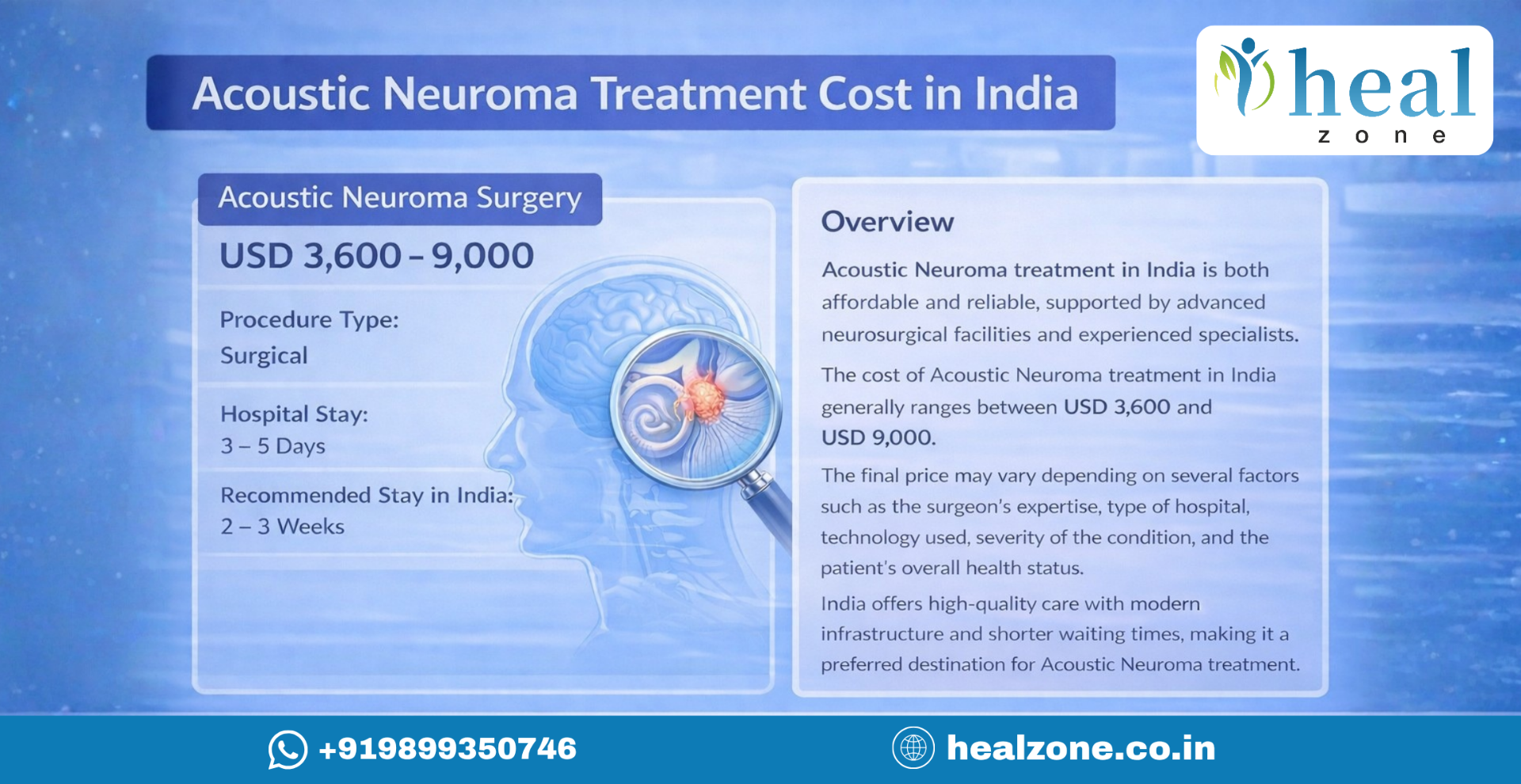
Cost:
$ 3600-9000
Procedure Type:
Surgical
Hospitalization:
3-5 Days
Stay in India:
2-3 Weeks
Success Rate:
90%
Overview
Acoustic Neuroma treatment is affordable in India. The cost of Acoustic Neuroma treatment in India lies between USD 3600-9000. The exact procedure price depends on multiple factors such as the surgeon's experience, type of hospital, severity of the condition, patient's general condition, etc.
Contact us for free opinion
Top Doctors for Acoustic Neuroma in India

Dr. Sandeep Vaishya
36 Years Years of Experience

Dr. Sudheer Kumar Tyagi
36 Years Years of Experience




Dr. Manish Jain
16 Years Years of Experience
When people hear the term acoustic neuroma, the first reaction is usually fear — mainly because it involves a tumor near the brain and hearing nerves. However, the important thing to know is that acoustic neuroma is usually a benign (non-cancerous) tumor, and with modern treatment options, outcomes today are very good when diagnosed and treated on time.
Many patients search for treatment options mainly to understand what happens after diagnosis, who actually needs treatment, what types of treatment exist, and how recovery looks. Cost matters, but treatment choice, safety, and quality of life matter more.
This guide is written in a simple, human tone and focuses on giving maximum practical information so patients and families can make informed decisions.
What Is an Acoustic Neuroma?
An acoustic neuroma, medically known as vestibular schwannoma, is a slow-growing, non-cancerous tumor that develops on the nerve connecting the inner ear to the brain.
This nerve is responsible for:
- Hearing
- Balance
- Coordination
The tumor arises from Schwann cells that cover the nerve. As it grows, it presses on nearby structures, including:
- Hearing nerve
- Balance nerve
- Facial nerve
- Brainstem (in larger tumors)
Because it grows slowly, symptoms often develop gradually and may be ignored initially.
Why Does Acoustic Neuroma Occur?
In most patients, the exact cause is unknown.
However, risk factors include:
- Genetic disorder called Neurofibromatosis Type 2 (rare)
- Genetic mutations affecting nerve cell growth
- Possibly long-term exposure to loud noise (not fully proven)
- Age between 30–60 years is most common
Most cases occur randomly and are not inherited.
Common Symptoms of Acoustic Neuroma
Symptoms develop slowly and may be mistaken for routine ear problems.
1. Hearing Loss (Most Common)
- Usually affects only one ear
- Gradual hearing loss
- Difficulty understanding speech
- Sounds seem muffled
2. Ringing in the Ear (Tinnitus)
Constant buzzing or ringing sound in one ear.
3. Balance Problems
- Feeling unsteady
- Frequent imbalance
- Dizziness
4. Facial Numbness or Weakness
Occurs when tumor presses on facial nerve.
5. Headache or Pressure Sensation
Seen in larger tumors due to brain pressure.
6. Difficulty Swallowing or Coordination Issues
Occur in very large tumors.
Who Needs Treatment?
Not everyone with acoustic neuroma needs immediate treatment.
Doctors consider:
Tumor Size
Small tumors may simply be monitored.
Growth Rate
Some tumors grow extremely slowly.
Patient Age
Older patients may avoid surgery if tumor is stable.
Hearing Status
Treatment choice depends on remaining hearing.
Symptoms Severity
Treatment is recommended if symptoms worsen.
Types of Acoustic Neuroma Treatment
Treatment decisions are highly individualized.
There are three main approaches:
1. Observation (Watchful Waiting)
Best suited for:
- Small tumors
- Elderly patients
- Patients without severe symptoms
- Tumors not growing
How It Works
Doctors monitor tumor growth using MRI scans every 6–12 months.
Advantages
- No surgery required
- No hospital stay
- No immediate risk
Limitations
- Tumor may grow later
- Symptoms can worsen
- Treatment might still be needed eventually
2. Surgical Removal (Microsurgery)
Surgery is recommended when:
- Tumor is large
- Tumor is growing
- Brainstem pressure exists
- Symptoms are severe
Surgical Approaches
Retrosigmoid Approach
Used for tumors where hearing preservation may be possible.
Translabyrinthine Approach
Chosen when hearing is already lost.
Middle Fossa Approach
Used for very small tumors with hearing preservation goals.
What Happens During Surgery?
- Surgery takes 6–12 hours depending on tumor size.
- Patient stays in ICU initially.
- Hospital stay typically 5–10 days.
- Facial nerve monitoring is used to reduce nerve damage.
Benefits of Surgery
- Complete tumor removal possible
- Immediate relief from pressure symptoms
- Reduces risk of future growth
Risks of Surgery
- Hearing loss
- Facial weakness
- Balance issues
- CSF leakage
- Infection (rare)
- Long recovery
However, in experienced centers, serious complications are uncommon.
3. Stereotactic Radiosurgery (Gamma Knife / CyberKnife)
This is not traditional surgery.
It is high-precision radiation therapy targeting the tumor.
Who Is Suitable?
- Small or medium tumors
- Older patients
- Patients not fit for surgery
- Tumors showing slow growth
Procedure Overview
- No incision
- No anesthesia in most cases
- Treatment completed in one session or few sessions
- Patient goes home same day or next day
Benefits
- Non-invasive
- No hospital stay
- Lower complication risk
- Quick recovery
Limitations
- Tumor is not removed; growth is stopped
- Hearing may still decline over time
Requires long-term follow-up scans
Recovery After Treatment
After Surgery
Recovery includes:
- Balance therapy
- Facial exercises if needed
- Gradual return to activity
- Hearing rehabilitation
Most patients resume normal life in 4–8 weeks.
After Radiosurgery
Recovery is quick.
Patients may feel mild fatigue or headache for a few days.
Normal activities resume within days.
Possible Complications
Modern treatment has reduced risks, but possible issues include:
- Hearing loss
- Facial nerve weakness
- Balance problems
- Headache
- CSF leakage
- Rare recurrence
Early treatment improves outcomes significantly.
Acoustic Neuroma Treatment Cost in India (USD Estimate)
While treatment choice should not depend only on cost, patients often need cost estimates for planning.
Approximate costs in India:
|
Treatment Type |
Estimated Cost (USD) |
|
Observation (annual MRI follow-up) |
$300 – $800 per scan |
|
Radiosurgery (Gamma Knife/CyberKnife) |
$2,000 – $6,000 |
|
Microsurgical tumor removal |
$4,000 – $12,000+ |
Final cost depends on:
- Hospital type
- Tumor complexity
- ICU stay
- Length of hospitalization
- Surgeon expertise
- Post-treatment care
India remains a popular destination for international patients due to experienced neurosurgeons and advanced facilities at lower costs compared to many countries.
Life After Treatment
Most patients return to normal lives.
Possible long-term adjustments:
- Hearing aid usage
- Balance exercises
- Periodic MRI monitoring
- Facial physiotherapy if needed
Support groups and rehabilitation programs help patients adjust better.
When Should You See a Doctor?
Consult a specialist if you notice:
- Hearing loss in one ear
- Persistent tinnitus
- Balance problems
- Facial numbness
- Unexplained dizziness
Early diagnosis allows better treatment outcomes.
Final Thoughts
An acoustic neuroma diagnosis can feel overwhelming, but it is one of the most treatable brain tumors today. With modern surgical and radiation techniques, patients achieve excellent outcomes when treated at experienced centers.
The key points to remember:
- Not all tumors need immediate treatment.
- Multiple safe treatment options exist.
- Early diagnosis improves outcomes.
- Recovery is possible with proper rehabilitation.
If symptoms are present, consult a neurosurgeon or ENT specialist promptly.
Top Hospitals for Acoustic Neuroma in India

Frequently Asked Questions
An acoustic neuroma, also called vestibular schwannoma, is a non-cancerous, slow-growing tumor that develops on the nerve connecting the inner ear to the brain. This nerve controls hearing and balance.
The tumor itself is not cancerous and does not spread to other parts of the body. However, if it grows large, it can press on nearby nerves and brain structures, leading to serious symptoms such as hearing loss, balance issues, facial weakness, or even pressure on the brainstem.
So, while it is not cancer, it can become dangerous if left untreated when it grows large, which is why monitoring or treatment is important.
Acoustic neuroma is relatively rare. It affects roughly 1 in 100,000 people per year, though detection has increased due to improved MRI imaging.
It usually occurs in adults aged 30 to 60 years, and men and women are affected almost equally.
The most common early symptom is hearing loss in one ear, often gradual and unnoticed at first. Many patients realize it only when using the phone or noticing difficulty hearing from one side.
Other early symptoms include:
- Ringing in one ear (tinnitus)
- Mild imbalance
- Difficulty understanding speech in noisy places
Because symptoms develop slowly, diagnosis is often delayed.
Yes. Although hearing loss usually develops slowly, some patients experience sudden hearing loss, sometimes mistaken for an ear infection or nerve inflammation.
In such cases, MRI scans often reveal a small acoustic neuroma.
Diagnosis usually involves:
- Hearing tests (audiometry)
- Balance testing
- MRI scan with contrast of brain and internal auditory canal
MRI is the most reliable method and can detect very small tumors.
Latest Blogs