

Contact us for Artificial Cornea Transplant Cost in India
Artificial Cornea Transplant Cost in India
$6,000 – $18,000
90 %
Many people choose India for artificial cornea transplants because the country offers advanced eye care at affordable prices. The Artificial Cornea Transplant Cost in India
is generally remains in between $6,000 – $18,000,which is about a fraction of the cost for similar Transplant in other countries. Patients from different countries come here to restore vision lost due to severe corneal damage or failed transplants. India has skilled corneal surgeons, leading hospitals with international accreditation, and high-quality artificial corneal implants.
Artificial cornea transplantation is a specialized surgery for people who are not able to receive a standard donor cornea transplant. Thanks to new techniques and safer materials, this procedure is now more successful and reliable for restoring vision.
Top Doctors for Artificial Cornea Transplant in India

Dr. Neeraj Sanduja
MBBS, MS, FAICO, FICO, FRCS
Cataract & Refractive Surgeon, Retina/Vitreoretinal Surgeon
26 Years of Experience


Dr. Tarun Kapur
MBBS, MS, Certificates/Trainings
Cataract & Refractive Surgeon, General Ophthalmologist, Retina/Vitreoretinal Surgeon
35 Years of Experience
Factors Affecting Artificial Cornea Transplant Cost in India
The total cost of an artificial cornea transplant in India can vary depending on several practical factors:
- Type of implant: Different keratoprosthesis models (Boston KPro, AlphaCor, OOKP) come with different price ranges.
- Hospital category: Super-specialty and premium hospitals usually have higher package costs than mid-range centers.
- Surgeon’s experience: Senior corneal specialists with advanced expertise may charge more for their skills.
- Complexity of the surgery: Costs rise if both eyes need treatment or if additional eye procedures are required.
- Pre-surgery tests: Scans, imaging, and blood tests add to the overall expense.
- Post-surgery requirements: Medications, follow-up visits, and any extra care needed can influence the final cost.
- City of treatment: Major metros like Delhi, Mumbai, and Bengaluru generally have higher treatment charges than smaller cities.
These factors together determine the final amount, so it’s helpful to discuss a clear estimate with your chosen hospital before planning your treatment.
Top Hospitals for Artificial Cornea Transplant in India

Indraprastha Apollo Hospital, New Delhi
Indraprastha Apollo Hospital, NH-19, New Delhi

Medanta-The Medicity Gurgaon
CH Baktawar Singh Rd, Medicity, Islampur Colony, Sector 38, Gurugram, Haryana 122001
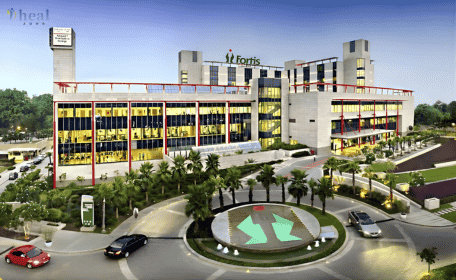
Fortis Memorial Research Institute (FMRI) Gurugram
Sector - 44, Opposite HUDA City Centre, Gurugram, Haryana 122002

Max Super Speciality Hospital, Saket
Press Enclave Marg, Saket, New Delhi, Delhi 110017
Cost of Artificial Cornea Transplant in India by Procedure Type
The cost of an artificial cornea transplant in India varies based on the type of procedure and implant. Here are the typical price ranges:
1. Boston Type I Keratoprosthesis
Cost: $6,000 – $12,000
- Widely used for failed corneal grafts
- Suitable for patients with severe corneal scarring
2. Osteo-odonto Keratoprosthesis (OOKP)
Cost: $10,000 – $18,000
- Complex procedure using patient’s tooth and jawbone as support
- Recommended in cases of severe ocular surface disease
3. Alphacor and Other Advanced Keratoprostheses
Cost: $7,000 – $15,000
- Designed for long-term durability and biocompatibility
- Requires specialized surgical expertise
Artificial cornea transplants cost more than natural donor cornea transplants because of the expensive materials and the need for special surgical skills.
Cost Comparison: Artificial Cornea Transplant in India vs Other Countries
India offers treatment at a much lower cost than Western countries, while still maintaining high quality:
|
Country |
Average Cost (USD) |
|
USA |
$30,000 – $50,000 |
|
UK |
$25,000 – $40,000 |
|
UAE |
$20,000 – $35,000 |
|
Turkey |
$12,000 – $20,000 |
|
Thailand |
$15,000 – $25,000 |
|
India |
$6,000 – $18,000 |
Patients who choose India for an artificial cornea transplant can save up to 70–80%.
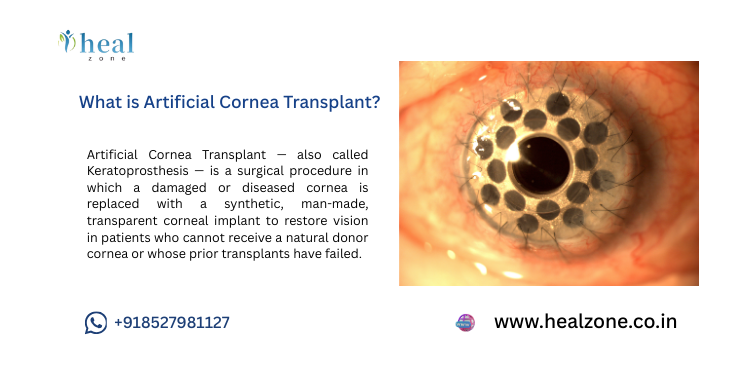
What Is an Artificial Cornea Transplant (Keratoprosthesis)?
An artificial cornea, or keratoprosthesis, is a synthetic implant used to restore vision when a natural donor cornea is not suitable or earlier transplants have failed. It replaces the damaged central cornea with a clear artificial one, letting light pass through and improving vision.
Who Needs Artificial Cornea Transplant (Keratoprosthesis)?
- Patients with failed previous cornea transplants
- Eyes with severe scarring, clouding, or injury
- Damage caused by chemical burns, infections, or autoimmune diseases
- When donor corneas are unavailable or unsuitable
Benefits of Artificial Cornea Transplant
- Provides vision restoration in cases where natural transplants are not possible
- Helps patients who have had multiple failed grafts
- Offers a clear central cornea, improving overall vision
- Reduces dependence on donor tissue availability
- Can significantly improve quality of life by restoring sight in otherwise blind eyes
Types of Artificial Cornea Transplants Available in India
Artificial cornea surgery is done when natural cornea transplants are not possible or have failed more than once. In India, experienced surgeons at leading eye centers offer several types of artificial corneas.
1. Boston Keratoprosthesis (KPro Type I)
- The most commonly performed artificial cornea in India.
- Suitable for patients with multiple failed grafts or severe corneal disease.
- Provides functional vision with good long-term outcomes.
2. Modified Boston KPro / Advanced Designs
- Improved versions of the Boston KPro with better integration and long-term clarity.
- Often used for high-risk or complex eyes with severe scarring or inflammation.
3. Osteo-Odonto Keratoprosthesis (OOKP)
- A specialized procedure for extremely damaged eyes.
- Uses the patient’s own tooth and surrounding bone to support the artificial cornea.
- Ideal for cases where other artificial corneas are unlikely to succeed.
4. Alphacor Keratoprosthesis
Advanced artificial cornea made of biocompatible polymer; used in complex ocular conditions.
Natural vs Artificial Cornea Transplant in India – Cost & Comparison
|
Aspect |
Natural Cornea |
Artificial Cornea |
|
Cost |
$2,000 – $6,000 |
$6,000 – $18,000 |
|
Source |
Donor tissue |
Synthetic implant |
|
Success Rate |
80–95% |
70–90% |
|
Indications |
Corneal scarring, keratoconus |
Failed grafts, severe ocular surface disease |
|
Follow-Up |
Moderate |
Intensive, lifelong monitoring |
|
Availability |
Readily available in eye banks |
Limited, specialized centers |
Artificial cornea transplants are more expensive, but they are needed for patients who cannot receive a natural graft.
Success Rates of Artificial Cornea Transplant in India
Success rates vary depending on the device and patient condition:
- Boston Keratoprosthesis (KPro Type I)
- Success Rate: 70%–85%
- Used in cases with multiple failed natural grafts or severe corneal damage
- Requires lifelong eye drops and regular follow-up
- Modified Boston KPro / Advanced Designs
- Success Rate: 75%–85%
- Designed for better tissue integration and long-term clarity
- Offers improved outcomes for eyes with severe scarring or inflammation
- Osteo-Odonto Keratoprosthesis (OOKP)
- Success Rate: 65%–80?pending on patient selection and surgeon experience
- Used in extremely damaged eyes where other transplants fail
- Involves using the patient’s own tooth and bone to support the artificial cornea
- Alphacor: 65–80% long-term
Good results depend on choosing the right candidates, having an experienced surgeon, and ensuring proper follow-up care after the surgery.
Step-by-Step Surgical Procedure for Keratoprosthesis
1. Preoperative Assessment
A complete eye check-up along with detailed imaging tests and a general health evaluation to ensure the patient is fit for surgery.
2. Surgical Planning
Selection of appropriate keratoprosthesis type based on eye condition.
3. Anesthesia
Local or general anesthesia depending on patient and procedure complexity.
4. Removal of Damaged Cornea
Excision of diseased tissue to prepare for the implant.
5. Implantation of Artificial Cornea
Insertion and secure positioning of the synthetic device.
6. Immediate Postoperative Care
Monitoring for complications such as infection or graft displacement.
7. Discharge and Follow-Up
Medication regimen, regular check-ups, and monitoring for long-term success.
Risks and Complications of Artificial Cornea Transplant in India
Artificial cornea surgery can restore vision when natural transplants are not possible, but there are some risks patients should be aware of. With regular check-ups and early treatment, most problems can be handled smoothly and don’t turn into anything serious.
Common Risks and Complications:
- Infection:
Eye infections can occur after surgery, which is why strict hygiene and regular use of prescribed eye drops are essential. - Graft Extrusion or Loosening:
The artificial cornea can sometimes move or become loose as time passes, so regular follow-up visits are important. In some cases, a small adjustment or additional surgery may be needed to keep it stable - Glaucoma:
Increased eye pressure can develop after surgery and may need long-term management. - Retinal Detachment:
Though rare, retinal problems can occur and need prompt attention. - Inflammation and Corneal Melting:
The surrounding tissue may become inflamed or weakened, which can affect graft stability. - Vision Fluctuations:
Vision might fluctuate while you’re healing, and in some cases, you may need an extra procedure to help improve the final outcome. - Long-Term Dependence on Medications:
Many patients need lifelong eye drops to prevent infection, inflammation, and rejection. - Other Rare Complications:
Discomfort, scarring, or need for repeat procedures may occur in a small number of patients.
Recovery After Artificial Cornea Transplant in India
Recovery after an artificial cornea (keratoprosthesis) transplant is different from a standard cornea transplant and requires careful monitoring to ensure the best outcomes. Most patients notice gradual improvement in vision over weeks to months, but full recovery may take longer depending on the eye’s condition.
Key Points During Recovery:
- Hospital Stay:
Most patients remain in the hospital for a couple of days after surgery so the medical team can check the eye closely and make sure the initial healing is going well. - Medication & Eye Drops:
Lifelong use of prescribed eye drops, including antibiotics and anti-inflammatory medications, is often necessary to prevent infection and inflammation. - Follow-Up Visits:
Regular follow-ups are very important. In the beginning, you may need weekly visits, and later these become monthly, so the doctor can keep a close watch on the implant and your overall eye health. - Eye Protection:
Always use an eye shield at night and avoid rubbing or pressing the eye. - Activity Restrictions:
Avoid strenuous activities, swimming, dusty environments, and heavy lifting until cleared by your doctor. - Watch for Warning Signs:
Redness, pain, sudden vision changes, or discharge should be reported immediately, as early intervention can prevent complications. - Long-Term Care:
Artificial cornea patients often require regular check-ups for life to ensure the graft remains healthy and vision stable.
Postoperative Care and Follow-Up after Artificial Cornea Transplant
After a cornea transplant, it is important to care for your eye and attend all follow-up visits. This protects the new graft, helps prevent problems, and keeps your vision as good as possible. Here are some key points to remember:
- Use Eye Drops as Prescribed: Antibiotics, steroids, and lubricants help prevent infection and reduce inflammation.
- Protect Your Eye: Wear your eye shield—especially at night—to keep the operated eye safe. Try not to rub it or put any pressure on it.
- Avoid Strenuous Activities: Hold off on heavy lifting, bending, or intense workouts until your doctor says it’s safe.
- Keep the Eye Away from Dust and Water: Stay away from swimming pools, avoid eye makeup for a while, and try to keep clear of dusty or smoky places so the eye can heal without risk of infection.
- Follow-Up Visits: Attend all scheduled appointments, typically at 24–48 hours, 1 week, 1 month, 3 months, 6 months, and as advised.
- Watch for Warning Signs: Reach out to your doctor right away if you notice redness, pain, sudden changes in vision, increased light sensitivity, or unusual tearing.
- Medication Adherence: Take all prescribed medications exactly as directed to lower the risk of graft rejection.
- Gradual Return to Daily Activities: Most patients can return to light work in 1–2 weeks, but should wait for their surgeon’s approval before driving or doing heavy activities.
Why Choose India for Artificial Cornea Transplant?
India is now a trusted destination for artificial cornea (keratoprosthesis) surgery. Many patients choose to come here because they receive high-quality care, advanced surgical options, and the expertise of experienced cornea specialists, yet at a cost that is much more affordable than in Western countries. This combination of skill, technology, and value makes treatment in India both reassuring and accessible for international patients.
Key Reasons to Choose India:
- Highly Skilled Surgeons: Experienced cornea specialists with extensive training in complex keratoprosthesis procedures.
- Advanced Eye Care Centers: Accredited hospitals equipped with modern operating theaters and diagnostic technology.
- Lower Cost: Surgery and hospital packages are often 1/3 of the cost in the US, UK, or Europe, without compromising quality.
- Access to Donor Tissue: Well-organized eye banks ensure timely availability of high-quality donor corneas when needed.
- Comprehensive Care Packages for International Patients: Hospitals offer assistance with visa, travel, accommodation, and post-operative follow-up.
- Shorter Waiting Times: Compared to many countries, patients can often schedule surgery sooner.
- High Success Rates: Experienced centers report 70%–85% functional vision success for keratoprosthesis in appropriate cases.
India provides world-class medical care at a much lower cost.
How Healzone Helps International Patients in India?
Healzone helps make the process smooth and stress-free for patients seeking artificial cornea transplants.
Services Include:
- Connecting patients with top corneal specialists and hospitals
- Assistance with medical visas and travel arrangements
- Accommodation support near hospitals
- 24/7 patient assistance
- Translation services for multiple languages
- Coordination of preoperative and postoperative care
With Healzone, international patients can expect a smooth experience from their first consultation through to full recovery.
Frequently Asked Questions
It is a synthetic cornea implanted to restore vision when natural donor corneas are unsuitable or previous transplants have failed.
Patients with repeated graft failures, severe corneal scarring, chemical injuries, autoimmune eye diseases, or when donor corneas are unavailable.
- Boston Keratoprosthesis (KPro Type I & II)
- Modified / Advanced Boston KPro
- Osteo-Odonto Keratoprosthesis (OOKP)
- AlphaCor
- Initial recovery is usually 1–2 weeks for Boston KPro and AlphaCor.
- 2–3 weeks for OOKP (initial surgery).
- Full visual improvement may take longer.
Possible risks include infection, inflammation, glaucoma, graft loosening, retinal problems, and vision fluctuations. Lifelong follow-up and medication are usually needed.
Costs vary by type:
- Boston KPro: $6,000–$12,000
- OOKP: $8,000–$15,000
- AlphaCor: ~$6,000–$10,000
Boston KPro / AlphaCor: ~10–14 days; OOKP: ~2–3 weeks.
Yes, most patients need long-term or lifelong eye drops to prevent infection, inflammation, and maintain graft stability.
