

Contact us
India Makes History: Fortis Gurugram Ranked #36 Among the World’s Best Smart Hospitals 2026
By Shaivana Bano
21 January 2026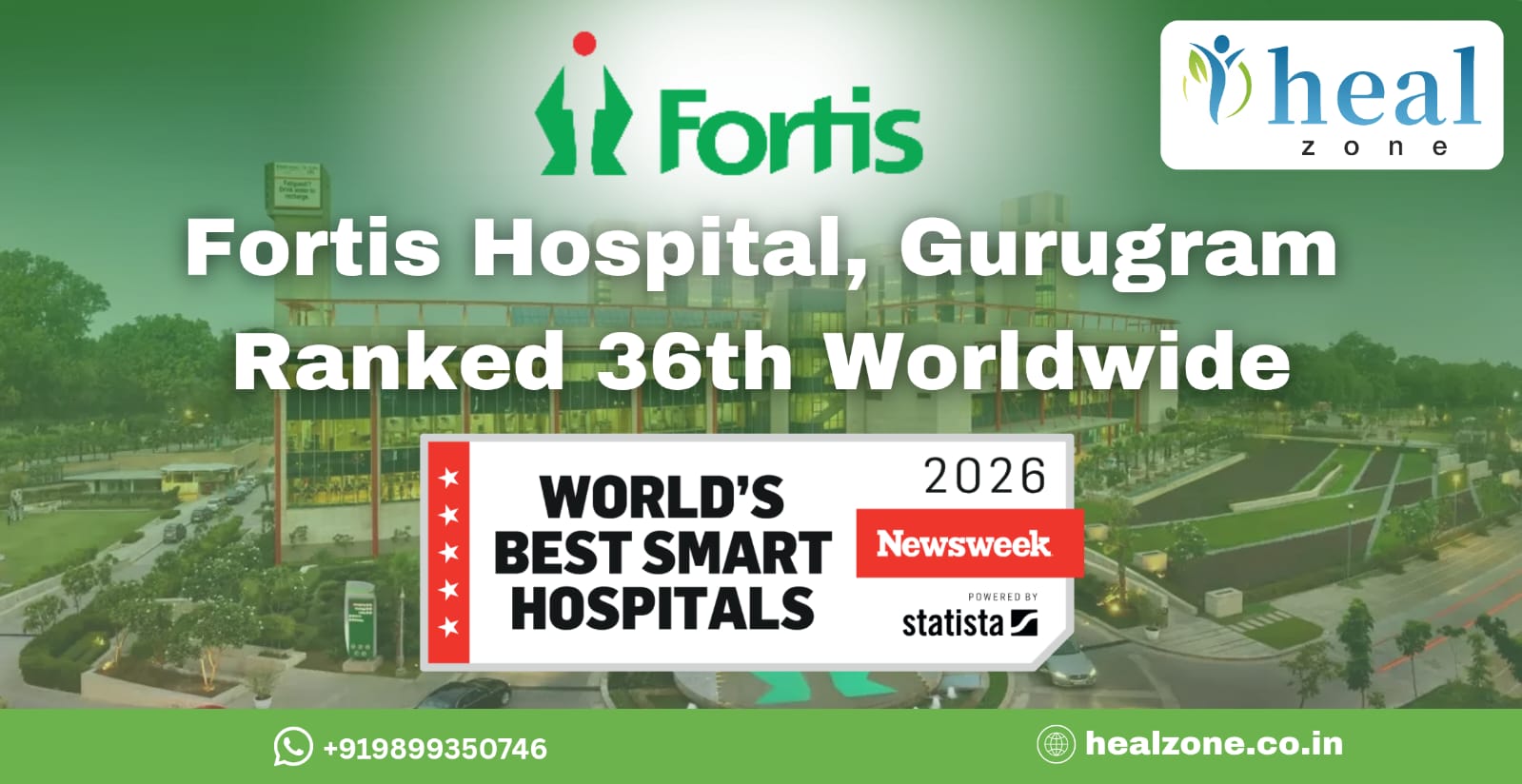
- Understanding the ‘World’s Best Smart Hospitals’ Ranking
- How Are Hospitals Ranked?
- Why Fortis Gurugram’s Ranking Is a Game-Changer for India
- What Makes a Hospital ‘Smart’? Key Technologies Explained
- How Fortis Gurugram Bases Performance on These Innovations
- Real Benefits — Not Just Buzzwords
- Fortis Gurugram vs. Global Peers: A Contextual Look
- India’s Healthcare Renaissance: What This Ranking Means Nationally
- Looking Ahead: What’s Next for Smart Healthcare in India?
- Conclusion: A Milestone for Indian Healthcare
Healthcare in India has taken a monumental leap forward, and a new global accolade confirms it. In the prestigious World’s Best Smart Hospitals 2026 list — released by Newsweek in partnership with Statista — Fortis Memorial Research Institute (FMRI), Gurugram has secured an extraordinary #36 ranking worldwide. This achievement is historic for Indian healthcare because FMRI is the only Indian hospital to make the Top 50 Smart Hospitals in the world for 2026 — a testament to its pioneering use of cutting-edge technology, digital maturity, and patient-centric innovation.
In this comprehensive blog, we’ll explore:
-
What the World’s Best Smart Hospitals ranking really means
-
Why FMRI’s achievement is a milestone for India
-
The key smart technologies that power next-generation healthcare
-
How these innovations translate into better patient care
-
A deeper look at specific technologies shaping FMRI’s success
-
What this ranking means for the future of Indian healthcare
Understanding the ‘World’s Best Smart Hospitals’ Ranking
Before we dive into Fortis Gurugram’s incredible journey, let’s understand the context.
Every year, Newsweek — a globally respected media outlet — collaborates with Statista, a global statistics and ranking authority, to publish the World’s Best Smart Hospitals list. This ranking highlights hospitals worldwide that are leaders in integrating advanced digital technologies, automation, and data-driven healthcare solutions into care delivery.
How Are Hospitals Ranked?
The evaluation is based on multiple pillars:
-
Global Peer Recommendations: Thousands of healthcare professionals worldwide recommend hospitals they consider technologically advanced.
-
Statista Smart Hospitals Maturity Survey: Hospitals submit detailed data about how they use digital technologies — from electronic systems to AI and telemedicine.
-
Accreditation Info: Recognized quality benchmarks like JCI accreditation support rankings.
More than 3,500 hospitals were evaluated globally, and FMRI made it into the top 50 — ranking #36 worldwide.
This isn’t just a trophy — it’s proof that India can compete with the world’s leading hospitals in medical technology and digital innovation.
Why Fortis Gurugram’s Ranking Is a Game-Changer for India
India has long been known for high-quality clinical outcomes and cost-effective healthcare. But this recognition places the country on the global map for digital healthcare maturity — a future-focused dimension of modern medicine.
Here’s why this matters:
1. A Strong Signal of Digital Leadership
Fortis Gurugram demonstrates that Indian healthcare isn’t just clinically excellent — it’s technologically sophisticated too. Landing at #36 ahead of many prestigious global institutions shows that India’s healthcare is evolving beyond traditional strengths.
2. Benefits for Patients at Home and Abroad
The ranking not only boosts confidence among Indian patients but also enhances India’s reputation as a medical tourism destination — especially for international patients seeking tech-enabled care.
3. Inspiration for Other Hospitals
When one Indian hospital performs at this level, it sets a benchmark for others to follow — raising the standard of smart healthcare across the country.
In short, this isn’t just an award — it’s a milestone in India’s healthcare transformation.
What Makes a Hospital ‘Smart’? Key Technologies Explained
So what exactly does it take to be a Smart Hospital? At the core, it’s about adopting and integrating technologies that improve efficiency, quality of care, patient experience, and safety.
Here are the core pillars that define a smart hospital:
1. Artificial Intelligence (AI) and Machine Learning
AI is at the forefront of healthcare technology. In a smart hospital setting, AI can:
- Predict patient deterioration before symptoms escalate
- Automate analysis of medical imaging (X-rays, MRIs, CT scans)
- Support clinical decision-making with evidence-based recommendations
AI also enables population health analytics — spotting trends across patient groups to support preventive care and planning.
At Fortis Gurugram, AI applications work behind the scenes to drive faster diagnostics and personalized treatment guidance. This improves outcomes and frees clinicians to focus more on patient-centred care.
2. Electronic Hospital Systems & Seamless Data Exchange
A smart hospital can’t function without a powerful digital backbone. This includes:
- Electronic Health Records (EHR): Complete digital patient records accessible across departments
- Lab & Radiology Systems: Real-time integration for faster reporting
- Interoperability: Data exchange between systems without manual intervention
This reduces delays, eliminates errors from paper-based workflows, and supports real-time clinical decisions.
3. Telemedicine and Virtual Care Services
Telemedicine has revolutionized healthcare access — especially for patients who live far from advanced medical centers.
Smart hospitals integrate telehealth platforms that:
- Enable virtual consultations
- Allow remote monitoring of chronic conditions
- Reduce wait times and travel needs
- Support home-based rehabilitation
Particularly after COVID-19, telemedicine isn’t just convenient — it’s essential.
4. Robotics and Automation
Robotics may evoke futuristic images, but today, they are an everyday part of smart hospitals.
Robotic systems assist in:
- Precision surgery (e.g., minimally invasive procedures)
- Automated medication dispensing
- Clean-room functions (reducing infection risks)
For example, robotic assistance during surgery increases accuracy, shortens recovery times, and improves safety.
5. Patient Safety Technologies
This includes systems such as:
- Smart monitoring for vital signs
- Real-time alerts for clinical teams
- Fall-detection systems
- Automated infection control processes
These tools reduce medical errors and enhance patient outcomes, especially in critical care units.
6. Digital Patient Engagement Tools
Smart hospitals make it easier for patients to navigate their healthcare experience. This includes:
- Online appointment scheduling
- Mobile apps with health summaries
- Integrated billing and insurance processing
- Pre-visit instructions and follow-up reminders
This enhances transparency, reduces anxiety, and empowers patients in their own care journey.
How Fortis Gurugram Bases Performance on These Innovations
While specific proprietary details about Fortis Gurugram’s technology deployment aren’t published publicly, its inclusion and ranking at #36 validates its adoption across the key smart hospital pillars described above.
Here’s how:
AI & Data-Driven Healthcare Integration
FMRI’s systems support automated data analytics and clinical decision support tools — enhancing speed and accuracy in complex diagnoses. Its improvements in electronic systems and clinical informatics likely contributed to advanced scoring in Statista’s survey.
Telemedicine & Virtual Services
Fortis utilizes telehealth effectively, especially relevant to patients who are:
- Overseas
- With mobility limitations
- Seeking follow-up care
This expands access while reducing logistical barriers.
Electronic System Maturity
A smart hospital must demonstrate seamless data flow across departments — improving quality control and reducing wait times for lab reports, imaging results, and clinical documentation.
FMRI’s high ranking implies they have achieved significant maturity here.
Patient-Centric Digital Tools
From online appointment features to digital records accessible for continuity of care, Fortis leverages digital tools that elevate patient engagement and experience — a key component of smart hospital maturity.
Real Benefits — Not Just Buzzwords
You might wonder: Do these technologies make a real difference for patients? The answer is a resounding yes — and here’s how:
Faster Diagnoses
AI-assisted imaging and automated lab systems shorten turnaround time for key tests.
Lower Risk
Robotics and smart monitoring systems decrease human error, especially during surgical and critical care procedures.
Better Access
Telemedicine bridges geographical gaps for patients with travel constraints.
Continuous Care
Digital systems enable better post-treatment follow-up — so patients stay healthier longer.
Together, this means safer care, faster recovery, and more informed treatment decisions.
Fortis Gurugram vs. Global Peers: A Contextual Look
While Fortis ranked #36, the World’s Best Smart Hospitals 2026 list features global leaders in healthcare innovation. At the top are institutions like the Mayo Clinic (#1) — known for pioneering AI in healthcare — and other leaders leveraging massive investments in digital transformation.
Fortis Gurugram’s position among such pioneers signifies India’s growing presence on the global tech-healthcare stage.
India’s Healthcare Renaissance: What This Ranking Means Nationally
Fortis Gurugram being the only Indian hospital in the Top 50 Smart Hospitals sends a powerful message:
- India is no longer just an affordable care destination
- But a hub for cutting-edge, tech-driven healthcare
- And an innovator in digital healthcare delivery systems
This tells international patients and healthcare stakeholders that India is investing in next-generation healthcare — not just traditional clinical excellence.
Looking Ahead: What’s Next for Smart Healthcare in India?
With progress accelerating, here’s what we might expect in the coming years:
Wider AI Adoption
From diagnostics to personalized treatment plans, AI will continue expanding clinical roles.
Expanded Telehealth Solutions
Expect deeper integration of remote monitoring and virtual AI assistant tools.
Even Smarter Automation
Robotics will enhance precision in surgeries and everyday hospital operations.
Patient-First Digital Experiences
Mobile apps and digital touchpoints will become the norm — empowering patients further.
India’s success with Fortis Gurugram sets a precedent — and healthcare institutions nationwide will build on this momentum.
Conclusion: A Milestone for Indian Healthcare
Fortis Memorial Research Institute’s global recognition as the #36 smartest hospital in the world in 2026 is more than an accolade — it’s a defining moment for healthcare in India.
It showcases how:
- advanced technologies
- data-driven systems
- patient-centric digital tools
- and global excellence
come together to deliver world-class medical care here at home.
India has firmly entered the arena of smart, digital healthcare pioneers, and Fortis Gurugram’s success is a beacon of what’s possible when innovation meets compassionate care.
Let this achievement inspire hospitals, clinicians, patients, and policymakers alike — because the future of healthcare in India is not just promising… it’s transformative.
Contact us
Written by

B.Sc. & M.Sc. in Medical Imaging Technology
Frequently Asked Questions
A hospital becomes “smart” when it integrates technologies such as:
-
Artificial intelligence (AI)
-
Electronic Health Records (EHR)
-
Telemedicine solutions
-
Robotic surgery systems
-
Automated workflows
-
Digital patient platforms
-
Data-driven decision systems
The goal is to improve efficiency, patient safety, and clinical outcomes.
Fortis Gurugram achieved this recognition by demonstrating excellence in:
-
Advanced digital healthcare systems
-
AI-based diagnostics and analytics
-
Robotic-assisted surgeries
-
Telemedicine platforms
-
Electronic integrated hospital systems
-
Smart patient monitoring tools
-
Digital-first patient experience
Its ranking shows the hospital has reached a high level of digital and technological maturity.
Yes, Fortis Gurugram is recognized as India’s only hospital within the Top 50 Smart Hospitals worldwide in the 2026 ranking. This highlights India’s growing capability in technology-driven medical care.
Smart hospitals improve patient care in several ways:
-
Faster diagnosis due to AI and automated reporting
-
More accurate treatment through robotics and clinical decision systems
-
Lower risk of errors using digital alerts and automation
-
Better access through telemedicine
-
Improved recovery due to minimally invasive surgical technologies
-
Greater convenience through mobile apps and digital records
The result is a health system that is safer, faster, and more patient-friendly.
Not necessarily. While advanced technology can increase certain costs, it also:
-
Reduces errors
-
Shortens hospital stays
-
Improves efficiency
-
Reduces repeat procedures
This can make care more cost-effective in the long run, especially for patients needing complex treatments.
Latest Blogs

Reviews
I am Fadel Abu Muhammad from Tal Afar, Iraq My father had a brain tumor. We traveled to India to Accord Specialty Hospital, New Delhi, through a resident professor, Muhammad, Dr. Vikram, who called for a laparoscopic tumor removal operation. Thank God I thank the translator, the doctor, and all the hospital staff.
Posted On

I am Muhammad Reda from Baghdad, Iraq I was suffering from weakness in my left hand. I underwent tests and it turned out that I had a brain tumor. The translator, Muqeem Muhammad, contacted us and we traveled to India. I had a neuronavigation procedure performed by Dr. Sandeep Vashya Praise be to God, the operation was completed successfully on the computer At Fortis Hospital New Delhi I thank the translator and the doctor
Posted On
All our gratitude and appreciation to the wonderful translator Mohammed Muqeem, who was truly a great support and companion during our journey for my mother’s treatment in India. He was extremely helpful, deeply understanding of all our needs, patient, and dedicated in his work, which eased a lot of the hardship and challenges we faced being away from home. His presence with us was not just about translating words but about offering real human support in every situation and every moment. May God bless him and reward him greatly for all he has done for us.
Posted On
I'm Emad Mohammed Khadir from Iraq. I was suffering from cirrhosis and liver cancer. I came to Fortis Hospital in India to see Dr. Ankur Bahil, a consultant oncologist, with the help of our translator, resident professor Mohammed Al Hindi. Thank God, we received our chemotherapy doses. The doctor and all the hospital staff were very kind and helpful. May God bless them all. Thank you.
Posted On
I am Redha Fadel from Nasiriyah, Iraq. I had a bone tumor, osteosarcoma. I traveled to India to see Dr. Ankur, a cancer specialist at Fortis Hospital, with the help of Hill Zone Medical Tourism Company, Professor Muqeem Muhammad Al Hindi. I thank you for your humanity and services.
Posted On
Peace be upon you. I am from Iraq. My brother is suffering from a tumor in his left thigh (osteosarcoma). We came to Al-Nahda for treatment. We stayed at Fortis Hospital for two months. We are now going to Iraq and will return to India to complete the treatment and the joint replacement surgery. I would like to thank the polite Indian translator, Muqeem Mohammed Al-Hindi. He was our brother before he was a translator and he helped us a lot with my brother's illness. Thank you, Muqeem. Thank you, Fortis Hospital. Thank you, Dr. Ankur.
Posted On
Peace be upon you, I'm from Iraq. My name is Majid Mazhar Kazim. My brother was suffering from tumors, so we contacted a resident professor, Muhammad Al-Hindi, and we sent him medical reports. He received us from the airport in New Delhi. I highly recommend him to Iraqi patients. He is helpful and well-mannered. He didn't hold back on us and didn't leave us alone from the first day until the last. He also took us to the airport. I thank them all.
Posted On
I am Mohammed Kazim from Iraq, from Babylon. My brother Mushtaq was suffering from meningitis. We came to India to Fortis Hospital through our resident professor, Mohammed, the director of Hill Zone Medical Services. I thank them for their kind treatment and translation. It was an enjoyable and fruitful trip. Praise be to God.
Posted On
I am from iraq tilafar, i came to India for my treatment an immune disease, i am thankful to Mr Muqeem and hospital staff, Marego Asia Hospital
Posted On
I am from Iraq. My son was suffering from Hirayama disease. I called Heal Zone, and they arranged our treatment journey. Now my son is in good health, and his finger movement has come back.
Posted On
