

Contact us
Half-Matched (Haploidentical) Transplant Explained: Cost, Success Rate & Treatment in India
By Shaivana Bano
29 April 2026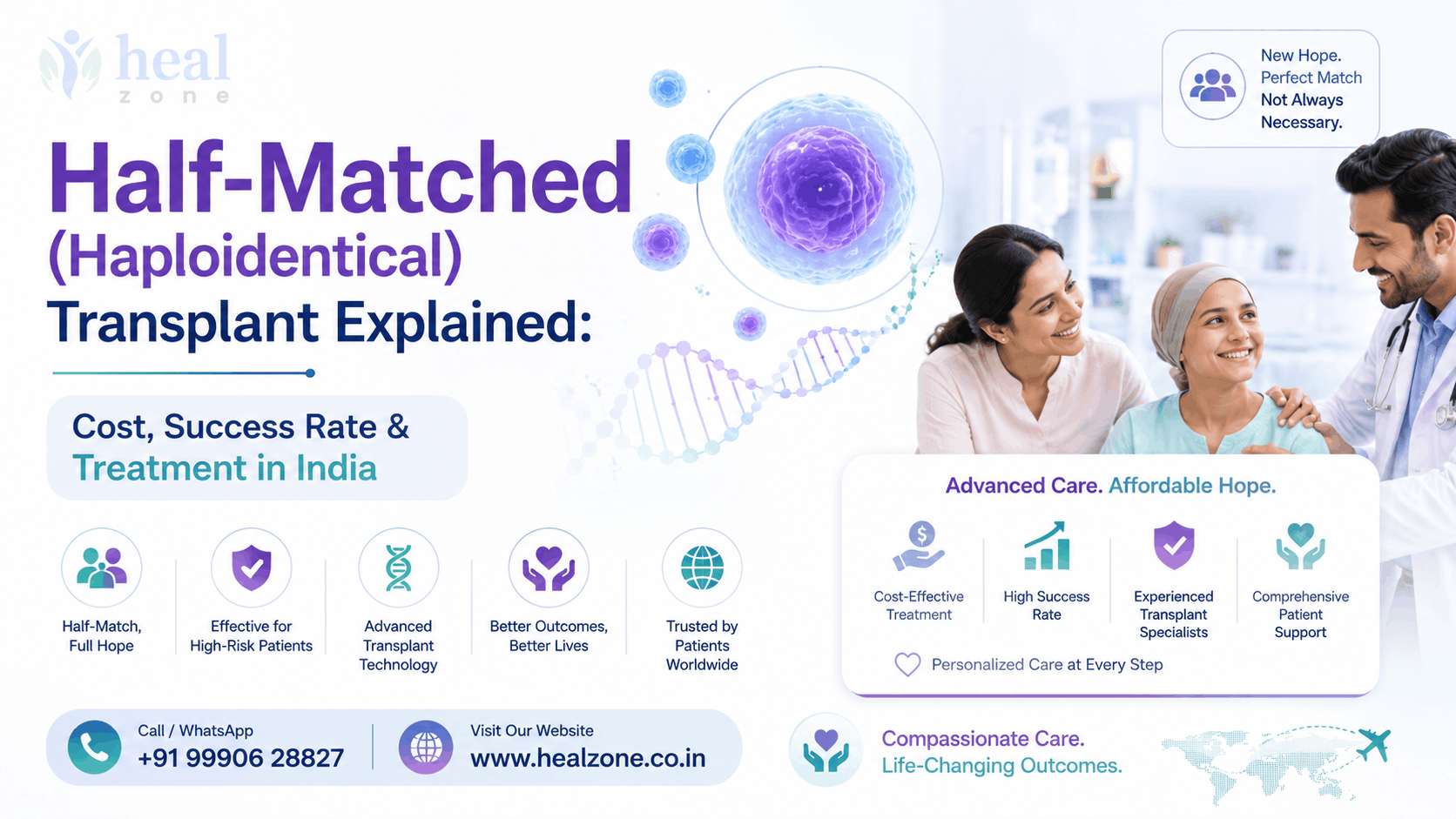
- What is a Half-Matched (Haploidentical) Transplant?
- Why is Haploidentical Transplant Important?
- Who Can Be a Donor in Haploidentical Transplant?
- Which Diseases Can Be Treated with Haploidentical Transplant?
- Step-by-Step Haploidentical Transplant Procedure
- What is GVHD (Graft vs Host Disease)?
- Haploidentical Transplant Success Rate in India
- Cost of Haploidentical Transplant in India
- Why Choose India for Bone Marrow Transplant?
- Is Haploidentical Transplant Safe?
- Why Choose Healzone for Bone Marrow Transplant in India?
- Get a Free Consultation Today
- Conclusion
If you or your loved one has been advised a bone marrow transplant but cannot find a fully matched donor, there is good news. A half-matched (haploidentical) transplant has made life-saving treatment possible for almost every patient.
At Healzone, we help international patients access advanced and affordable treatment in India with top hospitals and specialists.
What is a Half-Matched (Haploidentical) Transplant?
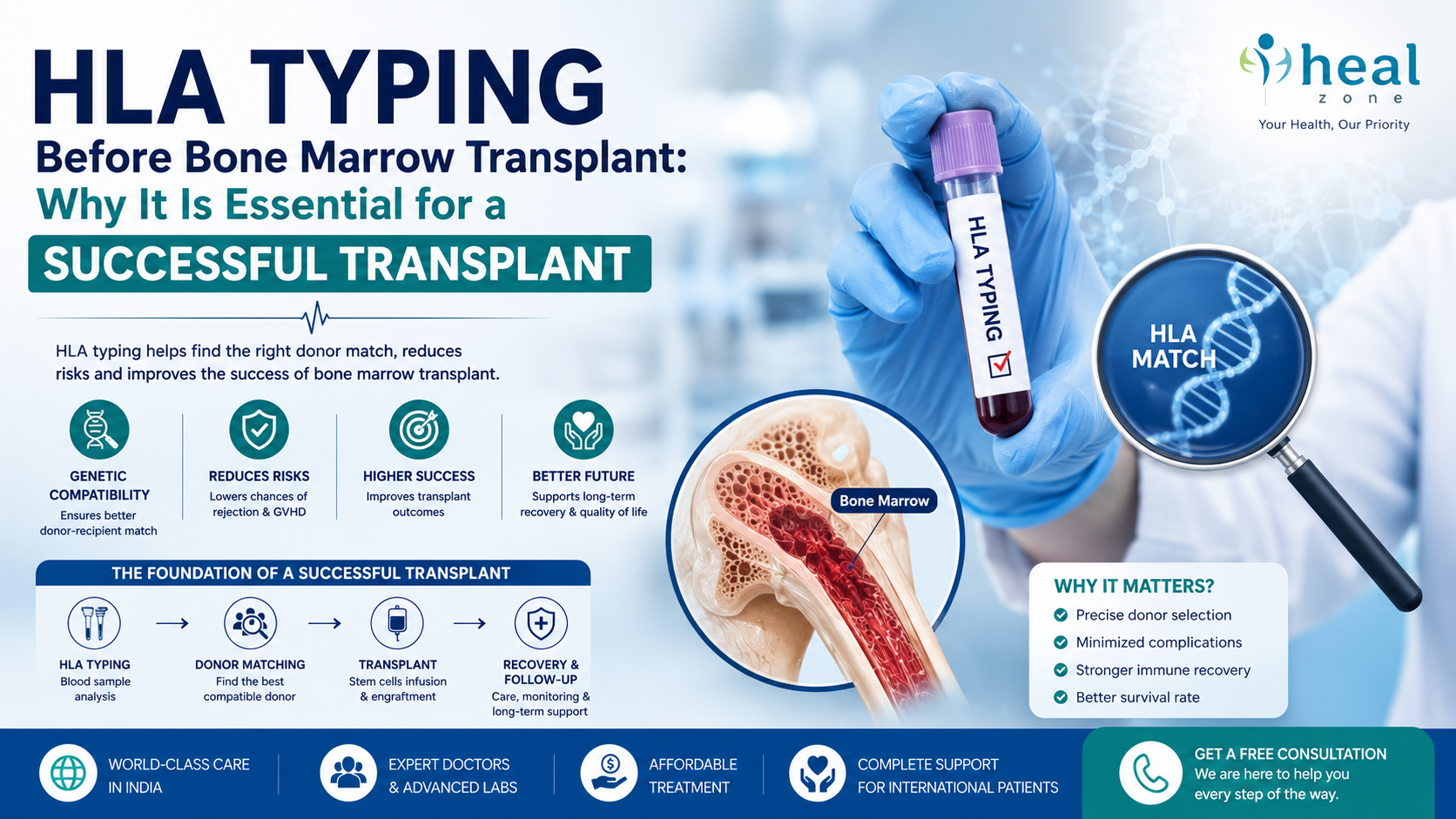
A haploidentical transplant is a type of bone marrow or stem cell transplant where the donor is only a 50% genetic match to the patient.
Unlike traditional transplants that require a perfect match, this procedure allows doctors to use a partially matched family member, making treatment faster and more accessible.
Why is Haploidentical Transplant Important?
Finding a fully matched donor can take months, and in many cases, patients never find one. This delay can be life-threatening.
Haploidentical transplant solves this problem by:
- Making donors easily available within the family
- Reducing waiting time for treatment
- Increasing survival chances through early intervention
This is why it is now widely used across leading hospitals in India.
Who Can Be a Donor in Haploidentical Transplant?
One of the biggest advantages is donor availability.
Common donors include:
- Parents
- Children
- Siblings
Since each person shares half of their genes with their parents, a parent is always a half match. This ensures that almost every patient has a donor ready.
Which Diseases Can Be Treated with Haploidentical Transplant?
This advanced treatment is used for several serious blood disorders and cancers, including:
In many cases, a bone marrow transplant offers the only curative treatment option.
Step-by-Step Haploidentical Transplant Procedure
Understanding the procedure helps reduce fear and builds confidence.
Patient Evaluation
Doctors assess overall health, disease stage, and organ function before proceeding.
Donor Selection
A suitable family donor is chosen based on compatibility and health condition.
Conditioning Therapy
The patient receives chemotherapy (and sometimes radiation) to destroy diseased cells and prepare the body.
Stem Cell Infusion
Healthy stem cells from the donor are infused into the patient through a vein.
Recovery & Monitoring
Doctors closely monitor immune recovery, infections, and complications after transplant.
What is GVHD (Graft vs Host Disease)?
GVHD is a condition where donor immune cells attack the patient’s body.
It is one of the main risks of transplant. However, with modern treatment protocols:
- Risk is significantly reduced
- Advanced medications control immune reactions
- Outcomes have improved greatly
Haploidentical Transplant Success Rate in India
Many patients ask: “What is the success rate of bone marrow transplant in India?”
Today, haploidentical transplant offers:
- 70% to 80% success rate in many conditions
- Results comparable to fully matched transplants
- Better outcomes when done early
Success depends on:
- Patient’s age
- Disease stage
- Hospital expertise
At Healzone, we connect patients with top transplant centers in India to ensure the best outcomes.
Cost of Haploidentical Transplant in India
One of the biggest advantages of choosing India is affordability.
Average Cost:
USD 30,000 – 45,000
This is significantly lower compared to:
USA: $250,000+
UK: $150,000+
What Does the Cost Include?
- Hospital stay
- Doctor fees
- Transplant procedure
- ICU care
- Medicines
Why Choose India for Bone Marrow Transplant?
India has become a global hub for medical tourism due to:
- Highly experienced transplant specialists
- Advanced medical technology
- Affordable treatment cost
- High success rates
- Short waiting time
Top hospitals in cities like Delhi, and Chennai offer world-class care for international patients.
Is Haploidentical Transplant Safe?
Yes, with modern advancements, this procedure is now considered safe and effective.
New techniques have:
- Reduced complications
- Improved survival rates
- Expanded treatment access
Today, it is often the preferred option when a full match is not available.
Why Choose Healzone for Bone Marrow Transplant in India?
At Healzone, we specialize in helping international patients receive the best cancer and blood disorder treatment in India.
Our Services Include:
- Free medical opinion from top doctors
- Hospital selection based on your case
- Cost estimation and treatment planning
- Visa assistance
- Airport pickup and accommodation
- Dedicated patient coordinator
We ensure a smooth, stress-free medical journey from start to finish.
Get a Free Consultation Today
If you are considering a bone marrow transplant, don’t wait for a perfect donor. A haploidentical transplant can save valuable time and lives.
Contact Healzone today for:
- Free case evaluation
- Personalized treatment plan
- Exact cost estimation
Start your journey towards recovery with trusted experts in India.
Conclusion
A half-matched (haploidentical) transplant has transformed the field of bone marrow transplantation. It has removed one of the biggest barriers — donor availability.
With the right guidance, expert doctors, and timely treatment, patients now have a better chance of cure and a healthier future.
Contact us
Written by

B.Sc. & M.Sc. in Medical Imaging Technology
Frequently Asked Questions
A haploidentical transplant is a bone marrow or stem cell transplant where the donor is a 50% genetic match, usually a parent, child, or sibling.
The success rate is around 60% to 80%, depending on the patient’s condition, age, and hospital expertise.
The cost typically ranges between USD 28,000–35,000, which is much more affordable than Western countries.
Close family members such as parents, children, or siblings can act as half-matched donors.
It is used to treat conditions like Leukemia, Lymphoma, Thalassemia, Aplastic Anemia, and Multiple Myeloma.
Dr. Dharma Choudhary
MBBS, MD, DM
Bone Marrow Transplant Specialist, Hemato-Oncologist, Hematologist
20 Years Years of Experience

Dr. Gaurav Kharya
MBBS, MD, DM, Fellowship
Pediatric Hematologist, Pediatric Oncologist
24 Years Years of Experience
Dr. Rahul Bhargava
MBBS, MD, DM
Bone Marrow Transplant Specialist, Hemato-Oncologist, Hematologist
22 Years Years of Experience

Latest Blogs
Reviews
I am Fadel Abu Muhammad from Tal Afar, Iraq My father had a brain tumor. We traveled to India to Accord Specialty Hospital, New Delhi, through a resident professor, Muhammad, Dr. Vikram, who called for a laparoscopic tumor removal operation. Thank God I thank the translator, the doctor, and all the hospital staff.
Posted On

I am Muhammad Reda from Baghdad, Iraq I was suffering from weakness in my left hand. I underwent tests and it turned out that I had a brain tumor. The translator, Muqeem Muhammad, contacted us and we traveled to India. I had a neuronavigation procedure performed by Dr. Sandeep Vashya Praise be to God, the operation was completed successfully on the computer At Fortis Hospital New Delhi I thank the translator and the doctor
Posted On
All our gratitude and appreciation to the wonderful translator Mohammed Muqeem, who was truly a great support and companion during our journey for my mother’s treatment in India. He was extremely helpful, deeply understanding of all our needs, patient, and dedicated in his work, which eased a lot of the hardship and challenges we faced being away from home. His presence with us was not just about translating words but about offering real human support in every situation and every moment. May God bless him and reward him greatly for all he has done for us.
Posted On
I'm Emad Mohammed Khadir from Iraq. I was suffering from cirrhosis and liver cancer. I came to Fortis Hospital in India to see Dr. Ankur Bahil, a consultant oncologist, with the help of our translator, resident professor Mohammed Al Hindi. Thank God, we received our chemotherapy doses. The doctor and all the hospital staff were very kind and helpful. May God bless them all. Thank you.
Posted On
I am Redha Fadel from Nasiriyah, Iraq. I had a bone tumor, osteosarcoma. I traveled to India to see Dr. Ankur, a cancer specialist at Fortis Hospital, with the help of Hill Zone Medical Tourism Company, Professor Muqeem Muhammad Al Hindi. I thank you for your humanity and services.
Posted On
Peace be upon you. I am from Iraq. My brother is suffering from a tumor in his left thigh (osteosarcoma). We came to Al-Nahda for treatment. We stayed at Fortis Hospital for two months. We are now going to Iraq and will return to India to complete the treatment and the joint replacement surgery. I would like to thank the polite Indian translator, Muqeem Mohammed Al-Hindi. He was our brother before he was a translator and he helped us a lot with my brother's illness. Thank you, Muqeem. Thank you, Fortis Hospital. Thank you, Dr. Ankur.
Posted On
Peace be upon you, I'm from Iraq. My name is Majid Mazhar Kazim. My brother was suffering from tumors, so we contacted a resident professor, Muhammad Al-Hindi, and we sent him medical reports. He received us from the airport in New Delhi. I highly recommend him to Iraqi patients. He is helpful and well-mannered. He didn't hold back on us and didn't leave us alone from the first day until the last. He also took us to the airport. I thank them all.
Posted On
I am Mohammed Kazim from Iraq, from Babylon. My brother Mushtaq was suffering from meningitis. We came to India to Fortis Hospital through our resident professor, Mohammed, the director of Hill Zone Medical Services. I thank them for their kind treatment and translation. It was an enjoyable and fruitful trip. Praise be to God.
Posted On
I am from iraq tilafar, i came to India for my treatment an immune disease, i am thankful to Mr Muqeem and hospital staff, Marego Asia Hospital
Posted On
I am from Iraq. My son was suffering from Hirayama disease. I called Heal Zone, and they arranged our treatment journey. Now my son is in good health, and his finger movement has come back.
Posted On
