

Contact us
HLA Typing Before Bone Marrow Transplant | Donor Matching Guide | HealZone
By Shaivana Bano
11 July 2026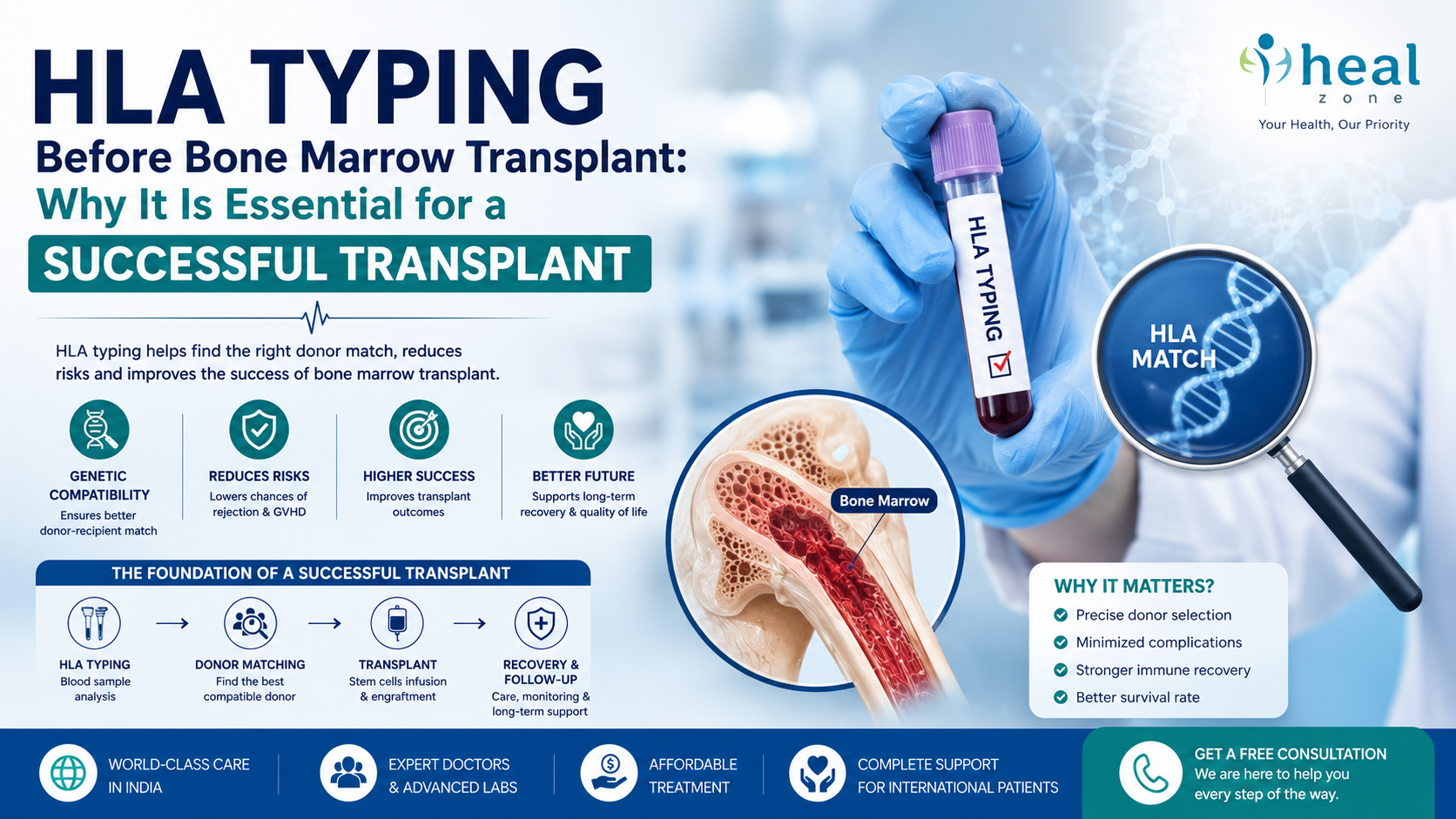
- HLA Typing Before Bone Marrow Transplant: Why It Is Essential for a Successful Transplant
- What is HLA Typing?
- Why is HLA Typing Important Before a Bone Marrow Transplant?
- What Does HLA Stand For?
- How HLA Matching Works
- Who Needs HLA Typing?
- Types of HLA Tests Performed Before Bone Marrow Transplant
- Understanding HLA Match Results
- HLA Typing for Sibling Donors vs. Unrelated Donors
- Can a Half-Matched (Haploidentical) Donor Be Used?
- Bone Marrow Transplant Process After HLA Matching
- Risks of Poor HLA Matching
- Cost of HLA Typing in India
- Why International Patients Choose India for Bone Marrow Transplant
- Best Hospitals in India for HLA Typing and Bone Marrow Transplant
- Best Doctors in India for Bone Marrow Transplant
- Why Choose HealZone?
- Conclusion
HLA Typing Before Bone Marrow Transplant: Why It Is Essential for a Successful Transplant
A Bone Marrow Transplant (BMT) can be a life-saving treatment for patients diagnosed with blood cancers and serious blood disorders such as leukemia, lymphoma, aplastic anemia, thalassemia, and multiple myeloma. However, before a transplant can be performed, doctors must identify a compatible donor. This is where HLA (Human Leukocyte Antigen) Typing becomes one of the most critical steps in the transplant journey.
HLA typing helps determine whether the donor's immune system is genetically compatible with the recipient, reducing the risk of transplant rejection and improving long-term success. Modern transplant medicine relies heavily on accurate HLA matching to ensure the best possible outcomes.
India has become one of the leading destinations for bone marrow transplantation due to its advanced HLA laboratories, internationally trained hematologists, experienced transplant specialists, and affordable treatment costs. Through HealZone, international patients receive complete support—from donor matching and hospital selection to travel assistance and post-transplant follow-up.
What is HLA Typing?
Before a bone marrow transplant can be planned, doctors need to identify a donor whose immune system closely matches that of the patient. HLA typing is a specialized genetic test that makes this possible by analyzing specific proteins found on the surface of white blood cells. These proteins play a vital role in how the immune system recognizes the body's own cells and distinguishes them from foreign cells. A close HLA match significantly lowers the chances of complications after transplantation.
HLA typing helps doctors to:
- Identify the most suitable donor
- Improve transplant success rates
- Reduce the risk of graft rejection
- Lower the chances of Graft-versus-Host Disease (GVHD)
- Plan personalized transplant treatment
Accurate HLA typing forms the foundation of a successful bone marrow transplant and is considered one of the most important pre-transplant investigations.
Why is HLA Typing Important Before a Bone Marrow Transplant?
The success of a bone marrow transplant depends largely on the compatibility between the patient and the donor. Since transplanted stem cells rebuild the patient's immune system, even small genetic differences can increase the risk of complications.
HLA typing provides essential information that helps transplant specialists make informed decisions.
Its major benefits include:
- Selecting the best donor
- Reducing immune system complications
- Improving long-term survival
- Increasing transplant success
- Lowering hospitalization risks
- Enhancing recovery
Because every patient's immune system is unique, HLA typing is considered an essential step rather than an optional test. It ensures that the transplant team has the best possible information before proceeding with treatment.
What Does HLA Stand For?
Human Leukocyte Antigen (HLA) refers to a group of genes responsible for regulating the body's immune response. These genes are inherited from both parents, making each individual's HLA pattern unique.
Doctors usually examine several important HLA markers, including:
- HLA-A
- HLA-B
- HLA-C
- HLA-DRB1
- HLA-DQB1
Modern transplant centers in India perform high-resolution DNA-based HLA typing, providing highly accurate donor-recipient matching and improving transplant outcomes.
How HLA Matching Works
Once HLA typing is completed, the laboratory compares the patient's HLA markers with those of potential donors. The closer the match, the better the chances of transplant success.
Potential donors may include:
- Brothers
- Sisters
- Parents
- Children
- Unrelated volunteer donors
- Umbilical cord blood donors
After identifying compatible donors, the transplant team performs additional compatibility testing before recommending the most suitable donor.
This careful matching process greatly reduces immune-related complications and improves long-term transplant success.
Who Needs HLA Typing?
HLA typing is recommended for patients who may require a bone marrow or stem cell transplant.
It is commonly performed for patients diagnosed with:
- Acute Leukemia
- Chronic Leukemia
- Hodgkin Lymphoma
- Non-Hodgkin Lymphoma
- Multiple Myeloma
- Aplastic Anemia
- Myelodysplastic Syndrome (MDS)
- Thalassemia Major
- Sickle Cell Disease
- Primary Immunodeficiency Disorders
- Certain inherited metabolic diseases
Early HLA testing helps doctors begin donor identification as soon as possible, reducing delays in treatment and improving patient outcomes.
Types of HLA Tests Performed Before Bone Marrow Transplant
Modern laboratories use advanced molecular techniques to achieve highly accurate donor matching.
Common HLA tests include:
- Low-Resolution HLA Typing
- High-Resolution HLA Typing
- DNA-Based HLA Typing
- Molecular Sequencing
- Donor Compatibility Testing
- Crossmatch Testing
These advanced testing methods enable transplant specialists to identify the safest and most compatible donor for each patient.
Understanding HLA Match Results
HLA compatibility is often described using matching scores, such as 10/10 or 9/10.
Common match categories include:
| Match Level | Meaning |
| 10/10 Match | Excellent compatibility |
| 9/10 Match | Very good compatibility |
| 8/10 Match | Acceptable in selected cases |
| Haploidentical Match | Half-matched family donor |
Although a 10/10 match is generally preferred, advances in transplant medicine have made successful transplants possible even with partially matched donors.
Your transplant team will evaluate all medical factors before selecting the most appropriate donor.
HLA Typing for Sibling Donors vs. Unrelated Donors
Siblings are often the first individuals tested because they have the highest probability of sharing identical HLA markers.
Doctors usually evaluate:
- Brothers
- Sisters
- Parents
- Children
- Extended family members
- International donor registries
If a fully matched sibling is unavailable, unrelated donor registries and haploidentical transplant programs provide additional options, significantly increasing access to life-saving transplantation.
Can a Half-Matched (Haploidentical) Donor Be Used?
Yes. Modern bone marrow transplant techniques have greatly improved the success of haploidentical transplantation.
Common haploidentical donors include:
- Mother
- Father
- Son
- Daughter
- Brother
- Sister
With improved conditioning regimens, immunosuppressive medications, and supportive care, many patients achieve excellent outcomes using half-matched donors.
This advancement has dramatically expanded transplant opportunities for patients who previously lacked a suitable donor.
Bone Marrow Transplant Process After HLA Matching
After a suitable donor has been identified, patients undergo a comprehensive transplant preparation program.
The process generally includes:
- Medical evaluation
- Donor health assessment
- Conditioning chemotherapy
- Stem cell collection
- Stem cell infusion
- Recovery in a specialized transplant unit
- Long-term monitoring
Every stage is carefully supervised by experienced hematologists and transplant specialists to maximize patient safety and treatment success.
Risks of Poor HLA Matching
A poor donor-recipient match increases the risk of complications after transplantation.
Possible complications include:
- Graft rejection
- Graft-versus-Host Disease (GVHD)
- Severe infections
- Delayed immune recovery
- Longer hospital stay
- Reduced transplant success
Accurate HLA typing significantly lowers these risks, making it one of the most valuable investigations before transplantation.
Cost of HLA Typing in India
India offers advanced HLA testing and donor compatibility services at significantly lower costs than many developed countries, making it an attractive destination for international patients seeking affordable bone marrow transplant evaluation.
- HLA Typing Test $150–$200
- High-Resolution HLA Typing $300–$400
The final cost depends on the testing method, laboratory, number of donor samples, and hospital selected.
India combines internationally accredited laboratories with experienced transplant specialists, ensuring reliable HLA testing at competitive prices.
Why International Patients Choose India for Bone Marrow Transplant
India has become one of the world's preferred destinations for bone marrow transplantation due to its medical expertise, advanced technology, and affordability.
International patients benefit from:
- Internationally trained hematologists
- Advanced HLA typing laboratories
- Modern Bone Marrow Transplant units
- Affordable treatment packages
- High transplant success rates
- Dedicated international patient services
- Short waiting periods
- Personalized care
These advantages allow patients to receive world-class treatment while reducing the financial burden often associated with transplantation in many developed countries.
Best Hospitals in India for HLA Typing and Bone Marrow Transplant
Several hospitals in India offer internationally recognized bone marrow transplant programs with advanced HLA typing facilities.
Leading hospitals include:
- Apollo Hospitals
- Medanta – The Medicity
- Fortis Memorial Research Institute
- Max Super Speciality Hospital
- BLK-Max Super Speciality Hospital
- Artemis Hospital
- Manipal Hospitals
- Kokilaben Dhirubhai Ambani Hospital
These hospitals are equipped with modern transplant units, advanced molecular laboratories, and experienced multidisciplinary teams dedicated to treating complex blood disorders.
Best Doctors in India for Bone Marrow Transplant
India is home to highly experienced hematologists and bone marrow transplant specialists.
Some of the leading specialists include:
- Dr. Rahul Bhargava
- Dr. Dharma Choudhary
- Dr. Gaurav Kharya
- Dr. Vikas Dua
- Dr. Satya Prakash Yadav
- Dr. Ashish Dixit
- Dr. Pawan Kumar Singh
- Dr. Nitin Sood
These experts have extensive experience in adult and pediatric bone marrow transplantation, treating patients from India and around the world.
Why Choose HealZone?
Choosing the right medical partner is just as important as choosing the right hospital. HealZone supports international patients throughout every stage of their treatment journey, ensuring a seamless and stress-free experience.
Our services include:
- Free medical report review
- Expert second opinion
- Hospital comparison
- HLA typing coordination
- Donor evaluation assistance
- Transparent treatment cost estimates
- Medical visa support
- Airport pickup
- Accommodation arrangements
- Interpreter services
- Dedicated patient coordinator
- Post-treatment follow-up
With HealZone, international patients receive personalized guidance, helping them make informed decisions and access high-quality care in India with confidence.
Conclusion
HLA typing before bone marrow transplant is one of the most important steps in ensuring a successful transplant. By accurately matching donors and recipients, this specialized genetic test reduces the risk of complications, improves transplant success, and enhances long-term recovery. With advanced HLA laboratories, internationally recognized hematologists, world-class transplant centers, and affordable treatment costs, India has become a trusted destination for bone marrow transplantation.
Whether you need donor matching, a second opinion, or complete transplant support, HealZone is here to guide you through every step of your journey—from initial consultation and HLA typing to hospital selection, treatment coordination, and post-transplant care.
Contact us
Written by

B.Sc. & M.Sc. in Medical Imaging Technology
Latest Blogs



Reviews
I am Fadel Abu Muhammad from Tal Afar, Iraq My father had a brain tumor. We traveled to India to Accord Specialty Hospital, New Delhi, through a resident professor, Muhammad, Dr. Vikram, who called for a laparoscopic tumor removal operation. Thank God I thank the translator, the doctor, and all the hospital staff.
Posted On

I am Muhammad Reda from Baghdad, Iraq I was suffering from weakness in my left hand. I underwent tests and it turned out that I had a brain tumor. The translator, Muqeem Muhammad, contacted us and we traveled to India. I had a neuronavigation procedure performed by Dr. Sandeep Vashya Praise be to God, the operation was completed successfully on the computer At Fortis Hospital New Delhi I thank the translator and the doctor
Posted On
All our gratitude and appreciation to the wonderful translator Mohammed Muqeem, who was truly a great support and companion during our journey for my mother’s treatment in India. He was extremely helpful, deeply understanding of all our needs, patient, and dedicated in his work, which eased a lot of the hardship and challenges we faced being away from home. His presence with us was not just about translating words but about offering real human support in every situation and every moment. May God bless him and reward him greatly for all he has done for us.
Posted On
I'm Emad Mohammed Khadir from Iraq. I was suffering from cirrhosis and liver cancer. I came to Fortis Hospital in India to see Dr. Ankur Bahil, a consultant oncologist, with the help of our translator, resident professor Mohammed Al Hindi. Thank God, we received our chemotherapy doses. The doctor and all the hospital staff were very kind and helpful. May God bless them all. Thank you.
Posted On
I am Redha Fadel from Nasiriyah, Iraq. I had a bone tumor, osteosarcoma. I traveled to India to see Dr. Ankur, a cancer specialist at Fortis Hospital, with the help of Hill Zone Medical Tourism Company, Professor Muqeem Muhammad Al Hindi. I thank you for your humanity and services.
Posted On
Peace be upon you. I am from Iraq. My brother is suffering from a tumor in his left thigh (osteosarcoma). We came to Al-Nahda for treatment. We stayed at Fortis Hospital for two months. We are now going to Iraq and will return to India to complete the treatment and the joint replacement surgery. I would like to thank the polite Indian translator, Muqeem Mohammed Al-Hindi. He was our brother before he was a translator and he helped us a lot with my brother's illness. Thank you, Muqeem. Thank you, Fortis Hospital. Thank you, Dr. Ankur.
Posted On
Peace be upon you, I'm from Iraq. My name is Majid Mazhar Kazim. My brother was suffering from tumors, so we contacted a resident professor, Muhammad Al-Hindi, and we sent him medical reports. He received us from the airport in New Delhi. I highly recommend him to Iraqi patients. He is helpful and well-mannered. He didn't hold back on us and didn't leave us alone from the first day until the last. He also took us to the airport. I thank them all.
Posted On
I am Mohammed Kazim from Iraq, from Babylon. My brother Mushtaq was suffering from meningitis. We came to India to Fortis Hospital through our resident professor, Mohammed, the director of Hill Zone Medical Services. I thank them for their kind treatment and translation. It was an enjoyable and fruitful trip. Praise be to God.
Posted On
I am from iraq tilafar, i came to India for my treatment an immune disease, i am thankful to Mr Muqeem and hospital staff, Marego Asia Hospital
Posted On
I am from Iraq. My son was suffering from Hirayama disease. I called Heal Zone, and they arranged our treatment journey. Now my son is in good health, and his finger movement has come back.
Posted On
