

Contact us for Aplastic Anemia Treatment in India
Aplastic Anemia Treatment in India
Introduction
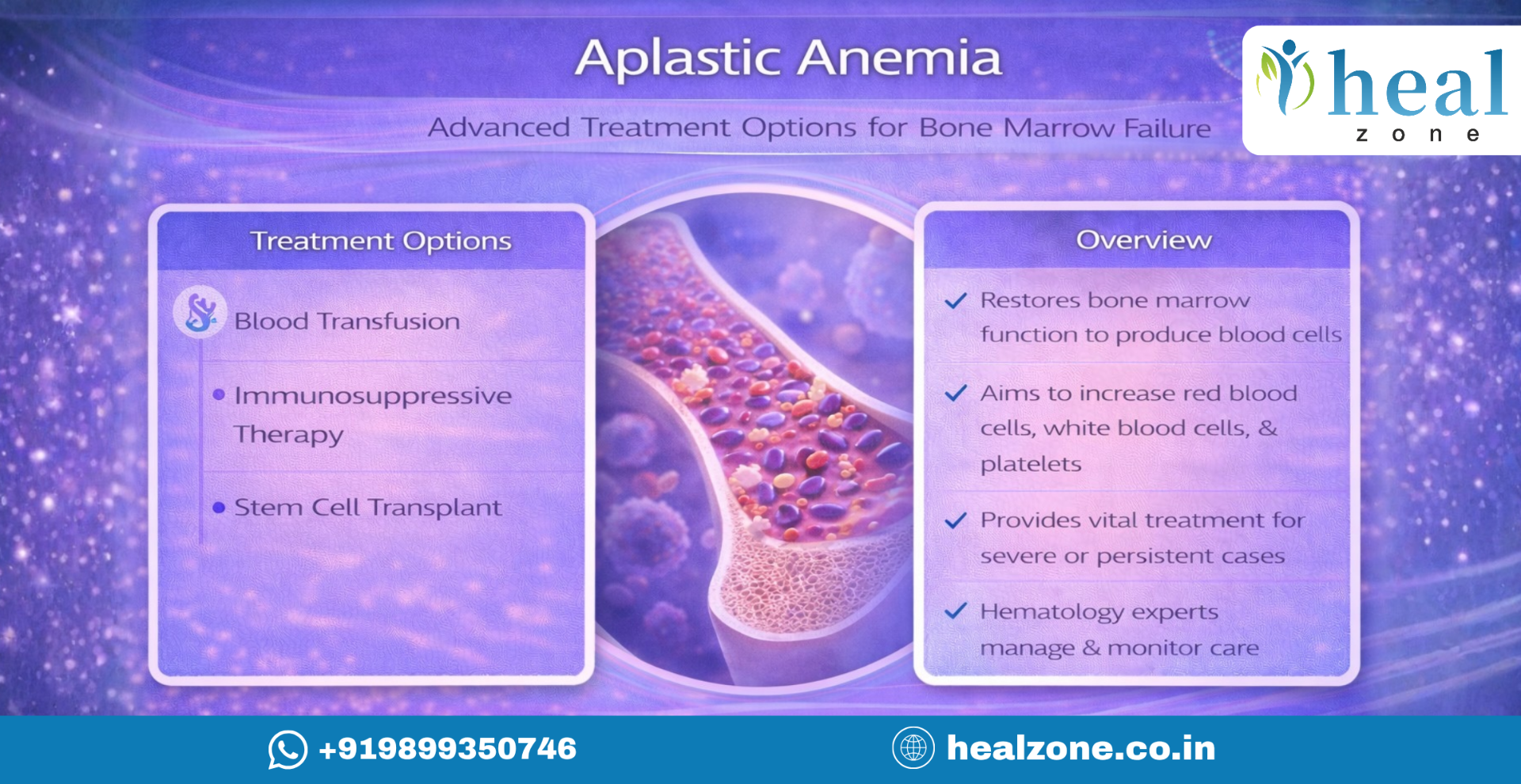
Aplastic anemia is a rare but potentially life-threatening bone marrow failure disorder in which the body stops producing enough healthy blood cells. Because bone marrow is responsible for generating red blood cells, white blood cells, and platelets, failure of this system affects oxygen delivery, immunity, and blood clotting at the same time.
Patients may experience:
- Extreme tiredness due to anemia
- Recurrent infections because of low immunity
- Easy bruising or bleeding from low platelets
Without timely diagnosis and treatment, severe aplastic anemia can become fatal.
Fortunately, India has become one of the world’s leading centers for aplastic anemia treatment, offering:
- Advanced diagnostic technology
- International-standard bone marrow transplant programs
- Highly experienced hematologists
- Significantly lower treatment costs compared to Western countries
For international patients seeking trusted treatment coordination, Healzone Medical Tourism provides complete support — from medical opinion and hospital selection to travel, treatment planning, and long-term follow-up.
Top Doctors for Aplastic Anemia


Dr. Dharma Choudhary
MBBS, MD, DM
Bone Marrow Transplant Specialist, Hemato-Oncologist, Hematologist
20 Years Years of Experience

Dr. Gaurav Kharya
MBBS, MD, DM, Fellowship
Pediatric Hematologist, Pediatric Oncologist
24 Years Years of Experience

Dr. Pratibha Dhiman
MBBS, MD, DM, Fellowship, Certificates/Trainings
Hemato-Oncologist, Hematologist
22 Years Years of Experience

Dr. Rahul Bhargava
MBBS, MD, DM
Bone Marrow Transplant Specialist, Hemato-Oncologist, Hematologist
22 Years Years of Experience
Understanding Aplastic Anemia
In aplastic anemia, the bone marrow stem cells are damaged or destroyed, leading to reduced production of:
- Red blood cells ? anemia, weakness, breathlessness
- White blood cells ? infections, fever
- Platelets ? bleeding, bruising
The condition may develop suddenly (acute) or gradually over time (chronic).
Major Causes
Most cases are autoimmune, where the immune system attacks bone marrow.
Other causes include:
- Viral infections (hepatitis, EBV, HIV, parvovirus B19)
- Radiation or toxic chemical exposure (benzene, pesticides)
- Certain medicines (chemotherapy, anti-seizure drugs, antibiotics)
- Pregnancy-related immune reactions
- Genetic marrow failure syndromes like Fanconi anemia
In nearly 50% of patients, no exact cause is identified (idiopathic aplastic anemia).
Symptoms That Should Not Be Ignored
Because all blood cell lines are reduced, symptoms affect the entire body.
Anemia-Related Symptoms
- Persistent fatigue and weakness
- Pale skin and dizziness
- Shortness of breath on exertion
- Rapid heartbeat
Low Immunity Symptoms
- Repeated infections
- Fever without clear reason
- Mouth ulcers or throat infections
Bleeding Symptoms
- Frequent nosebleeds
- Bleeding gums
- Tiny red skin spots (petechiae)
- Heavy menstrual bleeding
- Prolonged bleeding after minor injury
These signs require urgent hematology evaluation.
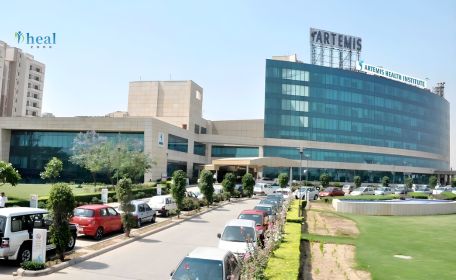
Top Hospitals for Aplastic Anemia
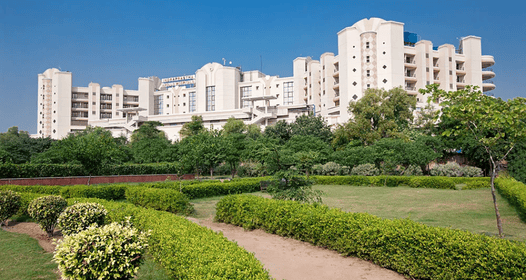
Indraprastha Apollo Hospital, New Delhi
Indraprastha Apollo Hospital, NH-19, New Delhi

Medanta-The Medicity Gurgaon
CH Baktawar Singh Rd, Medicity, Islampur Colony, Sector 38, Gurugram, Haryana 122001
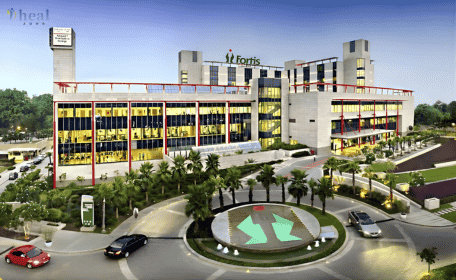
Fortis Memorial Research Institute (FMRI) Gurugram
Sector - 44, Opposite HUDA City Centre, Gurugram, Haryana 122002
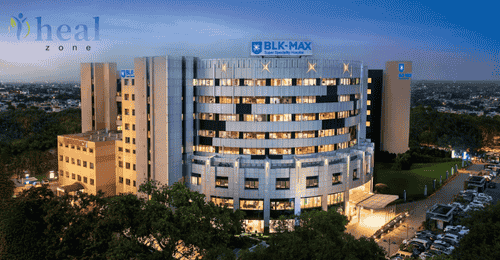
BLK-Max Super Speciality Hospital, New Delhi
Pusa Rd, Radha Soami Satsang, Rajinder Nagar, New Delhi, Delhi – 110005
Advanced Diagnosis of Aplastic Anemia in India
Indian tertiary hospitals follow international diagnostic protocols to confirm aplastic anemia and rule out similar disorders such as leukemia or myelodysplastic syndrome.
Key Tests Include
- Complete Blood Count (CBC) with differential
- Reticulocyte count to assess marrow activity
- Bone marrow aspiration and biopsy (gold standard test)
- Flow cytometry for PNH clone detection
- Viral and autoimmune screening
- Genetic testing for inherited marrow failure
- HLA typing for transplant donor matching
Through Healzone, international patients can receive pre-travel report review and treatment planning, saving critical time after arrival.
Severity Classification
Doctors classify aplastic anemia into:
- Non-severe
- Severe
- Very severe
This classification determines whether a patient needs:
- Observation and medicines
- Immunosuppressive therapy
- Urgent bone marrow transplant
Treatment Options for Aplastic Anemia in India
Treatment is highly individualized based on:
- Patient age
- Disease severity
- Donor availability
- Overall health condition
Supportive Care
Initial stabilization is essential, especially in severe cases.
Supportive treatment includes:
- Packed red blood cell transfusions
- Platelet transfusions to prevent bleeding
- Broad-spectrum antibiotics for infection
- Antifungal and antiviral protection
- Growth factors like G-CSF in selected cases
This phase prepares the patient for definitive therapy.
Immunosuppressive Therapy (IST)
For patients without a matched donor or those above transplant age, IST is the primary treatment.
Standard Drug Combination
- Anti-thymocyte globulin (ATG)
- Cyclosporine
- Eltrombopag (stimulates platelet production)
Expected Outcomes
- 60–80% response rate
- Gradual improvement over 3–6 months
- Some patients achieve long-term remission
India offers globally accepted IST protocols at much lower cost, and Healzone helps manage:
- Medication scheduling
- Hospital coordination
- Follow-up monitoring after discharge
Bone Marrow / Stem Cell Transplant (Curative Treatment)
A hematopoietic stem cell transplant (HSCT) replaces damaged marrow with healthy donor stem cells and is considered the only definitive cure for severe aplastic anemia.
Best Candidates
- Children and young adults
- Patients with matched sibling donors
- Patients not responding to IST
Types of Transplant in India
- Matched sibling donor transplant
- Matched unrelated donor transplant
- Haploidentical transplant (half-matched parent or sibling)
Success Rates
- 80–90% survival with matched sibling donor
- Rapidly improving results in haploidentical transplants
- Comparable outcomes to leading global centers
Indian transplant units provide:
- HEPA-filtered isolation rooms
- Advanced infection prevention
- Experienced transplant teams
- International safety standards
Healzone supports patients with donor search, budgeting, accommodation, translation, and long-term recovery coordination.
New and Emerging Therapies
Modern hematology in India includes:
- Thrombopoietin receptor agonists
- Reduced-intensity conditioning regimens
- Improved graft-versus-host disease prevention
- Access to global clinical trials
These advances are significantly improving survival and quality of life.
Cost of Aplastic Anemia Treatment in India
One of the biggest advantages of treatment in India is affordability without compromising quality.
Estimated Cost Range
- Diagnostics: USD 1,000 – 2,500
- Immunosuppressive therapy: USD 8,000 – 15,000
- Bone marrow transplant: USD 25,000 – 45,000
This is typically 60–80% cheaper than the USA, UK, or Europe.
Healzone ensures:
- Transparent hospital quotations
- No hidden costs
- Financial planning guidance
- Complete treatment packages for international patients
Recovery After Treatment
After Immunosuppressive Therapy
- Blood counts improve slowly over months
- Regular monitoring is essential
- Some patients may need long-term medicines
After Bone Marrow Transplant
Hospital Stay
- Usually 4–8 weeks in protected transplant unit
Early Recovery
- Infection prevention
- Blood count monitoring
- Nutrition and rehabilitation support
Long-Term Follow-Up
- Screening for graft-versus-host disease
- Vaccination schedule restart
- Gradual return to normal life
Many transplant survivors lead completely normal, healthy lives.
Why Choose India Through Healzone?
International families trust Healzone because it offers:
- Access to top hematology and transplant hospitals in India
- Fast medical opinion before travel
- Complete visa, travel, and accommodation support
- Dedicated international patient coordinators
- Language interpretation and local assistance
- Continuous post-treatment follow-up in home country
This creates a safe, smooth, and stress-free healing journey.
Conclusion
Aplastic anemia is a serious but highly treatable condition with modern medicine.
India provides:
- Accurate and early diagnosis
- Effective immunosuppressive therapy
- Curative bone marrow transplantation
- Advanced supportive care
- Affordable global-quality treatment
With expert coordination from Healzone Medical Tourism, patients from around the world can access life-saving aplastic anemia treatment in India with confidence, safety, and hope for complete recovery.
Frequently Asked Questions
Aplastic anemia is a rare blood disorder in which the bone marrow fails to produce enough red blood cells, white blood cells, and platelets, leading to fatigue, infections, and bleeding problems.
Yes. Bone marrow (stem cell) transplant is considered the only complete cure, especially in children and young adults with a suitable donor. Other patients can achieve long-term remission with immunosuppressive therapy.
The best treatment depends on age, disease severity, and donor availability: Young patients with matched donor → Stem cell transplant No donor or older age → Immunosuppressive therapy (ATG + Cyclosporine + Eltrombopag)
Diagnosis includes: Complete blood count (CBC) Bone marrow aspiration and biopsy Viral and autoimmune tests Flow cytometry and genetic testing HLA typing for transplant donor matching These tests confirm the condition and guide treatment planning.
Matched sibling donor transplant survival is typically 80–90% in experienced centers. Outcomes for haploidentical and unrelated donor transplants are also improving with modern technology.
