Contact us for free opinion
Matched unrelated donor (MUD) Bone marrow transplant Cost in India

Cost:
$ 38000-55000
Duration:
120-240 Hours
Hospitalization:
25-40 Days
Stay in India:
16-52 Weeks
Success Rate:
98%
Overview
Matched unrelated donor (MUD) Bone marrow transplant is affordable in India. The cost of Matched unrelated donor (MUD) Bone marrow transplant in India lies between USD 38000-55000. The exact procedure price depends on multiple factors such as the surgeon's experience, type of hospital, severity of the condition, patient's general condition, etc.
Contact us for free opinion
Top Doctors for Matched unrelated donor (MUD) Bone marrow transplant in India





What Is a Matched Unrelated Donor (MUD) Stem Cell Transplant?
A Matched Unrelated Donor (MUD) stem cell transplant is a type of allogeneic bone marrow or peripheral stem cell transplant in which the donor is not related to the patient but is fully matched genetically (typically 10/10 HLA match). These donors are found through international or national bone marrow registries.
It is a crucial option for patients who:
- Cannot find a matching donor within their family
- Require urgent transplant for leukemia, lymphoma, aplastic anemia, or genetic disorders
A MUD transplant involves a complex process including donor search, high-resolution HLA matching, collection of stem cells, and transplantation under a specialized medical setup.
When Is a MUD Transplant Recommended and Who Needs It?
MUD transplants are often recommended when:
- The patient lacks a matched sibling or haploidentical donor
- The disease demands a fully matched unrelated donor to reduce transplant-related complications
- The condition is aggressive, and curative therapy is required
Common Indications for MUD Transplant Include:
- Acute Myeloid Leukemia (AML)
- Acute Lymphoblastic Leukemia (ALL)
- Chronic Myeloid Leukemia (CML)
- Myelodysplastic Syndrome (MDS)
- Severe Aplastic Anemia (SAA)
- Thalassemia major and Sickle Cell Disease (when other donor types fail)
Children, young adults, and patients with rare HLA types are the most common beneficiaries of MUD transplantation in India.
How Are Unrelated Donors Found and Matched for Transplant in India?
India collaborates with both domestic and international stem cell donor registries to locate a genetically matched unrelated donor.
Key Registries Include:
- DATRI (India’s largest registry)
- BMST (Bangalore Medical Services Trust)
- NMDP (US National Marrow Donor Program)
- DKMS (Germany)
- World Marrow Donor Association (WMDA) – global search platform
Matching Process:
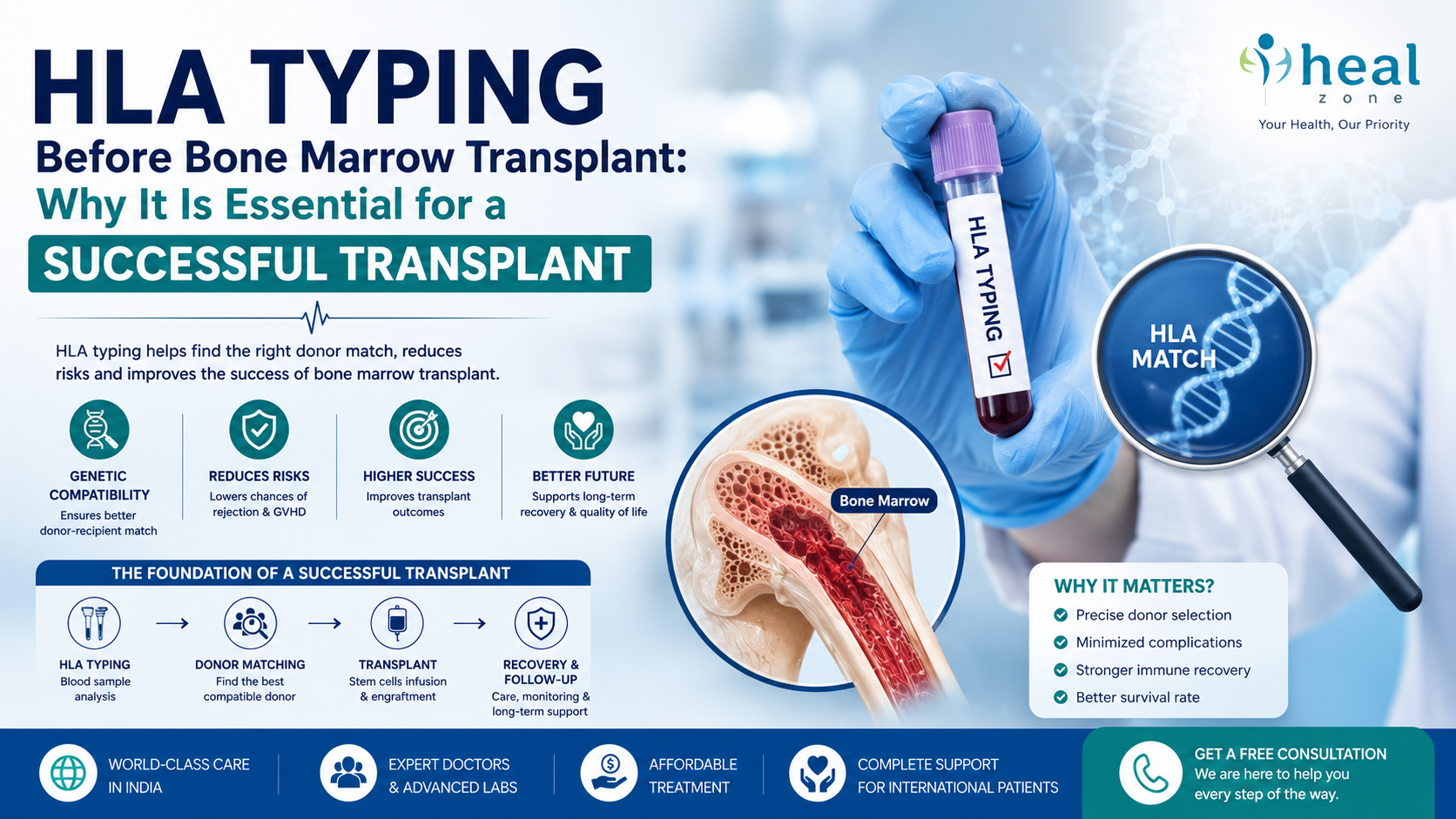
1. High-resolution HLA typing of the patient (A, B, C, DRB1, DQB1)
2. Search initiated in registries via registry software
3. Matched donors contacted for confirmation and secondary testing
4. Stem cells collected from donor and transported under controlled conditions
This process can take 3–6 weeks depending on match availability and donor responsiveness.
What Are the Types of Stem Cell Transplants Available in India?
India offers the full range of allogeneic stem cell transplants for international patients, including:
|
Transplant Type |
Donor Relation |
Match Level |
Availability |
|
Matched Sibling (MSD) |
Brother or sister |
100% |
25% of patients |
|
Haploidentical (Half-match) |
Parent, sibling, child |
50% |
Widely available |
|
Matched Unrelated Donor (MUD) |
Registry-based non-relative |
100% |
Registry dependent |
|
Umbilical Cord Blood Transplant |
Cord bank/registry |
Variable |
For pediatric/rare cases |
MUD transplant is especially useful when the patient is from a rare ethnic group or has unique HLA types that are hard to match within the family.
What Is the Step-by-Step Treatment Protocol for MUD Transplant in India?
India follows internationally approved BMT guidelines (EBMT, ASBMT, WMDA) for MUD transplantation, ensuring standardized and safe treatment for foreign patients.
1. Pre-Transplant Evaluation:
- CBC, LFT, RFT, chest X-ray, ECG, ECHO
- Bone marrow biopsy
- Viral screening (HIV, HBV, HCV, CMV)
- HLA high-resolution typing (patient and family)
2. Donor Identification:
- Search through national and global registries
- Confirmatory typing & infectious screening of donor
3. Conditioning Regimen:
- Chemotherapy ± Total Body Irradiation (TBI)
- Drugs: Busulfan, Fludarabine, Cyclophosphamide
4. Stem Cell Harvest and Transport:
- Peripheral blood stem cells (PBSC) or bone marrow harvested
- Transported in specialized cryo-boxes at 4–8°C
5. Transplant Day (Day 0):
- Stem cells infused intravenously
- Patient monitored for reactions
6. Post-Transplant Recovery:
- Isolation in BMT room with HEPA filters
- Supportive care: IV antibiotics, antivirals, antifungals
- Engraftment by Day +15 to +25
- GVHD prophylaxis using Tacrolimus, Methotrexate, ATG
What Technologies and Devices Are Used in MUD Transplant Units in India?
Top Indian hospitals use state-of-the-art technology and internationally certified safety protocols for successful MUD transplants. These technologies support donor cell processing, engraftment monitoring, and complication prevention.
Key Equipment and Systems:
- High-efficiency particulate air (HEPA)-filtered BMT rooms
- Automated apheresis machines (Spectra Optia, Fresenius Kabi)
- Cryopreservation systems for stem cell storage at –196°C
- Flow cytometry for CD34+ cell count and MRD tracking
- PCR-based HLA typing and viral load monitoring
- Continuous infusion pumps for safe chemo administration
This infrastructure ensures safe cell handling, infection prevention, and early detection of complications post-transplant.
Why Should International Patients Choose India for MUD Stem Cell Transplant?
India is globally recognized for delivering high-quality transplants at affordable costs, especially for foreign patients from Asia, Africa, the Middle East, and Europe.
Major Benefits:
- World-class BMT centers with international accreditation (NABH, JCI)
- Access to global stem cell registries (WMDA, DKMS, NMDP)
- Experienced transplant physicians trained abroad
- Cost savings of up to 80–90% compared to the US or UK
- Dedicated international patient departments for smooth travel, stay, and care
International patients also benefit from fast-track donor searches, visa assistance, and customized post-discharge care.
Why Choose Healzone for Transplant Coordination and Support in India?
Healzone is a trusted medical tourism partner offering end-to-end support to international patients seeking BMT in India. From diagnosis to recovery, Healzone ensures a seamless experience for families.
Healzone Services Include:
- Donor search assistance via global registries
- Coordination with leading transplant centers
- Transparent pricing and package deals
- Visa invitation letters and FRRO help
- Dedicated case managers, interpreters, and follow-up scheduling
- Help with travel, stay, and food preferences
With Healzone, patients gain peace of mind, knowing that all aspects of their journey are managed with care and professionalism.
What Is the Cost Breakdown for MUD Stem Cell Transplant in India?
The total cost of a MUD transplant in India ranges from $38,000 to $55,000, depending on the hospital, donor registry charges, and patient condition. Here's how it breaks down:
|
Component |
Estimated Cost (USD) |
|
Pre-transplant evaluation & blood tests |
$1,200 – $1,800 |
|
HLA typing & matching (High-resolution) |
$1,500 – $2,500 |
|
Donor search and registry fee |
$10,000 – $15,000 |
|
Stem cell collection and international transport |
$5,000 – $7,000 |
|
Conditioning chemotherapy & supportive medications |
$3,000 – $4,500 |
|
Transplant procedure and engraftment monitoring |
$4,000 – $5,500 |
|
Hospital stay in BMT unit (3–4 weeks) |
$4,000 – $6,000 |
|
Blood products, antibiotics, antifungals |
$2,000 – $3,000 |
|
Post-transplant outpatient care (30–60 days) |
$1,500 – $2,200 |
|
Total Estimated Cost |
$38,000 – $55,000 |
What Is the Recovery Timeline and Post-Transplant Care Process?
The recovery process after a MUD stem cell transplant is critical and requires long-term monitoring. Indian hospitals have dedicated post-transplant care protocols to ensure patient safety and long-term success.
Timeline of Recovery:
First 30 Days:
- The most crucial period for engraftment and infection control
- Neutrophil recovery begins between Day +12 to +25
- Daily blood tests, antibiotics, antifungals, and transfusions
Day 30–90:
- Tapering of immunosuppressants begins (if no complications)
- Patient discharged with strict hygiene protocols and dietary care
- Regular outpatient follow-ups every 5–7 days
3 to 6 Months:
- Immune system continues rebuilding
- Live vaccines avoided
- GVHD symptoms closely monitored
6 to 12 Months:
- Vaccination re-initiated
- Normal activities gradually resumed
Top Hospitals for Matched unrelated donor (MUD) Bone marrow transplant in India
Donor Registry and Matching Fees
– International registry access and donor coordination significantly add to the cost.
Stem Cell Collection & Transport
– Includes logistics, cryo-box shipping, customs, and courier management.
Hospital Type & City
– Premium cities like Delhi or Mumbai may have slightly higher charges.
Conditioning Regimen
– Use of radiation or specific chemo drugs influences drug costs.
Patient’s Condition & Comorbidities
– Complex cases may require longer ICU or isolation care.
Post-Transplant Care
– GVHD treatment, transfusions, and extended follow-up impact total cost.
Accommodation & Travel for International Patients
– Handled by Healzone, optional but factored in for long-term stay.
Advantages of MUD Stem Cell Transplant in India
Access to Global Registries: DATRI, DKMS, NMDP, WMDA
High HLA Matching Accuracy: Ensures better survival and reduced rejection
Lower Cost: Up to 85% savings compared to the US or UK
Internationally Accredited Hospitals: JCI/NABH certified
Experienced Specialists: Trained in Europe, US, and Singapore
Comprehensive Patient Support: Visa, accommodation, interpreter, and aftercare through Healzone
Risk Factors of MUD Stem Cell Transplant
GVHD (Graft-versus-Host Disease): Despite full match, GVHD may occur
Infection Risk: Immunosuppression increases vulnerability
Delayed Engraftment or Failure: Stem cells may take longer to grow
Toxicity: High-dose chemo/radiation may affect liver, lungs, or kidneys
Relapse: Cancer recurrence risk, especially in advanced-stage patients
Indian BMT centers use Tacrolimus, Methotrexate, ATG, and infection control protocols to minimize these risks.
How Does the Cost of MUD Transplant in India Compare to the US, UK, and Thailand?
India offers high-quality MUD transplants at a significantly lower price than Western or Southeast Asian nations.
|
Country |
Average Cost (USD) |
|
India |
$38,000 – $55,000 |
|
Thailand |
$75,000 – $100,000 |
|
USA |
$280,000 – $450,000 |
|
UK |
$200,000 – $350,000 |
By choosing India, patients save up to:
- $400,000 vs USA
- $150,000 vs UK
- $40,000+ vs Thailand
Despite lower costs, India maintains world-class success rates, safety, and aftercare, which makes it the ideal destination for MUD transplants.
Latest Blogs