Contact us for free opinion
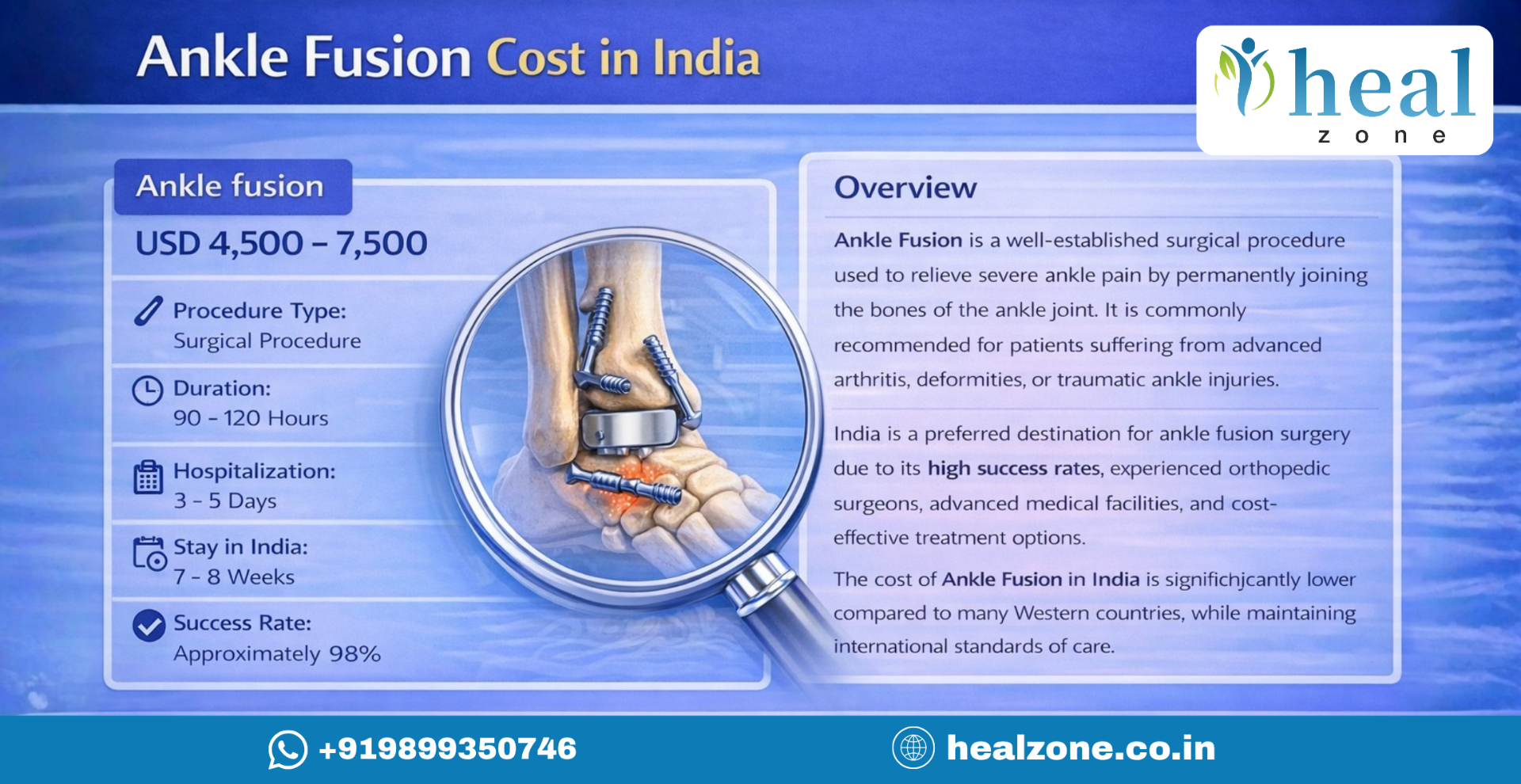
Ankle Fusion Cost in India
Duration:
90-120 Hours
Hospitalization:
3-5 Days
Stay in India:
7-8 Weeks
Success Rate:
98%
Overview
Ankle Fusion is affordable in India. The cost of Ankle Fusion in India lies between USD -. The exact procedure price depends on multiple factors such as the surgeon's experience, type of hospital, severity of the condition, patient's general condition, etc.
Contact us for free opinion
Top Doctors for Ankle Fusion in India




Dr. Puneet Girdhar
18 Years Years of Experience

Dr. (Prof.) Anil Arora
30 Years of Experience

Dr. Subhash Jangid
26 years Years of Experience
What is Ankle Fusion and When Is It Needed?
Ankle fusion, or ankle arthrodesis, is a surgical technique that involves joining the bones of the ankle joint—usually the tibia, fibula, and talus—using screws, plates, or rods. The purpose is to eliminate the motion at the joint, thereby reducing pain caused by bone-on-bone contact or joint instability.
This procedure is typically recommended when:
- A patient suffers from end-stage ankle arthritis, where cartilage is severely damaged.
- Conservative treatments such as medications, physical therapy, and injections have failed.
- There is severe deformity or instability in the ankle due to trauma, infection, or congenital disorders.
- The patient experiences chronic pain, swelling, and difficulty walking due to joint degeneration.
Ankle fusion is a reliable and effective option for long-term pain relief and functional improvement.
What Are the Different Types or Techniques of Ankle Fusion Surgery?
There are several surgical techniques used for ankle fusion, depending on the condition of the joint, surrounding bones, and patient preference:
- Open Ankle Fusion: This traditional technique involves making a larger incision to access the ankle joint, removing the cartilage, and placing hardware to hold the bones in place until they fuse.
- Arthroscopic Ankle Fusion: A minimally invasive technique using small incisions and a camera to guide the procedure. This method often results in less pain and a quicker recovery time.
- Tibiotalar Fusion: Fusion of the tibia and talus bones, commonly used in severe arthritis or deformity.
- Tibiotalocalcaneal Fusion: This technique fuses the tibia, talus, and calcaneus (heel bone), typically in cases involving subtalar joint arthritis or complex deformity.
- External Fixation Fusion: Sometimes used for patients with compromised soft tissue or infection risk, where external rods and pins stabilize the ankle.
The choice of technique depends on factors like bone quality, severity of deformity, presence of infection, and surgeon expertise.
What is the Standard Treatment Protocol for International Patients in India?
India offers a structured and personalized treatment journey for international patients undergoing ankle fusion:
- Pre-arrival Teleconsultation: Patients can consult with orthopedic specialists online, submit imaging reports, and receive a preliminary opinion and treatment plan.
- Arrival and Admission: Upon arrival, patients are admitted for evaluations, blood tests, X-rays, CT/MRI scans (if needed), and anesthetic clearance.
- Pre-operative Planning: The surgical team confirms the type of fusion needed, reviews implant options, and prepares for surgery.
- Surgical Procedure: The operation is conducted under general or regional anesthesia. Post-surgery, patients are moved to recovery and monitored closely.
- Post-operative Care and Physiotherapy: Patients receive pain management, physiotherapy guidance, and wound care. A splint or cast is applied.
- Discharge & Rehabilitation Plan: After 3–5 days in the hospital, patients are discharged with a clear rehabilitation schedule and tele-follow-up appointments.
This protocol ensures safety, comfort, and transparency for international patients throughout their medical journey.
What Kind of Devices, Implants, or Surgical Tools Are Used?
In ankle fusion surgery, high-quality orthopedic implants and surgical instruments are used to ensure a successful fusion:
- Screws and Plates: Titanium or stainless-steel screws and anatomical plates help stabilize the joint. These materials are bio-compatible and corrosion-resistant.
- Locking Plates: Used for complex or osteoporotic bone structures to provide additional stability.
- External Fixators: In cases where internal fixation isn't feasible, devices like the Ilizarov frame or ring fixators are used externally.
- Bone Grafts: Autografts (from the patient’s own body) or allografts (donor bone) may be added to enhance fusion in cases of bone loss or infection.
- Advanced Surgical Tools: In arthroscopic fusion, high-definition cameras, shavers, and radiofrequency ablation tools are employed to minimize tissue trauma.
All devices used in Indian hospitals comply with international quality standards and often come from globally recognized manufacturers.
What is the Cost Breakdown of Ankle Fusion Surgery in India?
The cost of ankle fusion surgery in India is highly affordable without compromising on quality. Here's a typical cost structure:
- Pre-operative Tests & Imaging: $150 – $300
- Surgical Fees: $1,200 – $2,000
- Anesthesia & OT Charges: $500 – $800
- Implants (screws/plates): $500 – $1,000
- Hospital Stay (3–5 Days): $600 – $1,200
- Physiotherapy & Medication: $200 – $400
- Follow-Up & Discharge Services: $100 – $200
Total Estimated Cost: $3,500 – $6,000
Note: The final cost may vary based on the type of implant used, patient’s health condition, choice of room category, and surgeon’s expertise.
Why Should International Patients Choose India for This Treatment?
India has become a global leader in orthopedic surgeries due to a blend of affordability, clinical excellence, and patient-centered care. Here’s why it stands out:
- Globally Trained Surgeons: Many orthopedic surgeons in India have been trained in the UK, USA, or Europe, bringing international expertise at a local cost.
- State-of-the-Art Facilities: Modern operating rooms, high-end diagnostic equipment, and infection-controlled recovery wards ensure safe treatment outcomes.
- Affordable Packages: Transparent and bundled pricing for surgery, implants, stay, and rehabilitation minimizes financial uncertainty for patients.
- Minimal Waiting Time: Unlike some countries with long waiting lists, Indian hospitals can schedule surgeries within a few days of evaluation.
- English-Speaking Medical Teams: Smooth communication helps international patients feel comfortable and confident during treatment.
- Cultural Comfort: India has a long tradition of welcoming medical tourists and offers specialized cuisine, translators, and hospitality tailored to various cultures.
All these factors combined make India a trusted hub for complex surgeries like ankle fusion.
Why Choose Healzone for Safe and Stress-Free Treatment in India?
Healzone is a dedicated medical tourism facilitator that bridges the gap between international patients and top-tier healthcare providers in India. Here’s how Healzone ensures a seamless and hassle-free experience:
- Personalized Case Review: Healzone collects patient reports, matches them with suitable hospitals, and obtains expert opinions before arrival.
- Transparent Cost Estimates: Detailed quotes with clear breakdowns eliminate surprise charges and ensure financial clarity.
- Priority Appointments: Healzone coordinates appointments with leading orthopedic surgeons and ensures zero waiting time.
- Logistics & Travel Assistance: Services include visa support, airport pickups, accommodation booking, and language interpreters.
Dedicated Case Manager: Every patient receives a personal care manager who is available 24/7 throughout their journey. - Post-Treatment Support: Healzone also assists with remote consultations, follow-up calls, and physiotherapy guidance once the patient returns home.
By partnering with JCI-accredited hospitals and reputed surgeons, Healzone makes ankle fusion surgery in India accessible, safe, and comfortable for global patients.
What Kind of Support Do Patients Get Before, During, and After Treatment?
International patients traveling to India for ankle fusion surgery can expect end-to-end support that ensures safety, comfort, and a smooth healing journey. This is especially true when partnering with professional facilitators like Healzone, who offer tailored medical travel coordination.
Before Treatment:
- Medical Records Review: Experts evaluate medical history and radiology reports before the patient arrives.
- Virtual Consultations: Online video calls are arranged with the orthopedic surgeon to clarify concerns, explain treatment plans, and set expectations.
- Visa & Travel Assistance: Complete guidance for obtaining a medical visa, including invitation letters and document preparation.
- Transparent Estimates: Patients receive a detailed treatment plan with cost breakdowns to help plan financially with confidence.
During Hospital Stay:
- Airport Transfers & Local Transport: Smooth pickup from the airport and drop-offs for all appointments.
- Dedicated Care Coordinator: A multilingual support staff is assigned to every patient to guide them through the hospital process.
- Comfortable Accommodation: Assistance in booking nearby hotels or guest houses for patients and attendants.
- Regular Updates: Family members are kept informed throughout surgery and recovery phases.
- 24/7 Assistance: Round-the-clock help with food, mobility support, language, and any non-medical need.
After Discharge:
- Post-Surgical Instructions: Patients are given written and verbal care plans, including medications, physiotherapy, and dietary guidelines.
- Follow-Up Consultations: Online follow-ups are scheduled with the doctor after returning home.
- Rehabilitation Guidance: Healzone offers access to remote physiotherapy advice and post-op care monitoring.
- Emergency Contact Access: In case of questions or complications, patients have access to their medical team via tele-support.
This all-inclusive support system ensures that international patients never feel alone, from pre-arrival to post-recovery.
Top Hospitals for Ankle Fusion in India
-
Type of Ankle Fusion Technique: Open surgery generally costs more than minimally invasive (arthroscopic) fusion due to increased operating time and recovery care.
-
Surgeon's Experience and Reputation: Highly experienced orthopedic surgeons may charge higher fees, especially those with international credentials or specialization in foot and ankle surgery.
-
Hospital Category and Location: Premium hospitals in metro cities (like Delhi, Mumbai, or Bangalore) usually have higher surgical and accommodation charges than smaller or regional hospitals.
-
Type and Quality of Implants/Hardware Used: The cost varies depending on whether standard or imported (FDA/CE-approved) plates, screws, or rods are used.
-
Severity and Complexity of the Condition: More complex deformities or cases requiring bone grafts or joint realignment increase surgical time and cost.
-
Anesthesia and Operating Room Charges: The duration of surgery and type of anesthesia (general vs. regional) significantly influence the cost.
-
Pre-Surgical Diagnostic Tests: X-rays, MRI, CT scans, and blood work are required for surgical planning and contribute to overall expenses.
-
Post-Operative Care and Hospital Stay: Longer hospital stays, especially in ICU or deluxe rooms, and intensive physiotherapy add to the total cost.
-
Physiotherapy and Rehabilitation Needs: The number of physical therapy sessions required post-surgery can affect the recovery cost.
-
Medical Tourism Services: For international patients, visa assistance, translators, airport transfers, and lodging are additional cost considerations.
What Are the Advantages of Undergoing Ankle Fusion in India?
India provides a range of benefits for patients undergoing ankle fusion surgery, making the procedure not only effective but also cost-efficient and safe:
- Cost Savings: Surgery in India can save patients up to 80% compared to the US or UK, even with travel and accommodation expenses included.
- High Surgical Success Rate: Surgeons in India have vast experience and success in complex ankle fusions, particularly in cases involving deformity or post-traumatic arthritis.
- Advanced Minimally Invasive Techniques: Options like arthroscopic fusion allow quicker recovery, less scarring, and reduced infection risk.
- Holistic Rehabilitation: Comprehensive recovery plans including physiotherapy, diet consultation, and pain management help patients regain mobility faster.
- Comfortable Stay Packages: Hospitals offer luxury and semi-private room options that include meals, nursing, and physiotherapy within the package.
In addition to the clinical benefits, patients often find warmth, empathy, and cultural sensitivity in Indian healthcare, making their healing journey more pleasant.
What Are the Possible Risks or Complications?
While ankle fusion surgery has a high success rate, like any surgical procedure, it carries potential risks. It's important for patients to be well-informed:
Common Risks:
- Infection: Can occur at the surgical site, though modern sterile techniques reduce the chance significantly.
- Delayed Bone Fusion: Sometimes the bones take longer to fuse, requiring extended immobilization or revision surgery.
- Swelling and Pain: Temporary pain and swelling post-surgery are expected and managed with medications.
Less Common Complications:
- Hardware Irritation: Screws or plates may cause discomfort and might need removal after bone healing.
- Blood Clots (DVT): Rare, but possible in lower limb surgeries; blood thinners may be prescribed.
- Nerve Damage: Minimal risk but can result in numbness or tingling around the foot or ankle.
- Adjacent Joint Stress: Loss of ankle movement may increase wear and tear in nearby joints over time.
Most complications are preventable or manageable with timely care and a structured rehabilitation program. The medical teams in India are trained to monitor and respond quickly to any post-operative concerns
Ankle fusion surgery in India is significantly more cost-effective compared to Western and developed nations, without compromising on the quality of care. Here's a comparative table that highlights the average cost differences:
|
|
|
|
|
|
|
|
|
|
|
|
|
|
|
|
|
|
|
|
|
India offers a price reduction of up to 80% compared to the US and UK, making it an ideal destination for patients who require high-quality surgical care at a lower expense. The affordable pricing also includes hospital stay, implants, medications, and follow-up, which are often billed separately in other countries

Frequently Asked Questions
Yes. Although ankle movement is eliminated, most patients regain a natural walking pattern with minimal pain and improved stability.
Yes. It permanently fuses the ankle bones. This is a one-time surgery with long-lasting results if post-op instructions are followed.
Yes. In selected cases, a minimally invasive arthroscopic fusion is possible, leading to faster recovery and smaller scars.
Yes. Screws, plates, or rods are commonly used to stabilize the bones during fusion and may remain in the body permanently.
Pain is common in the initial days but is well-controlled with medication. Long-term, the goal is to eliminate chronic joint pain.
This is rare, but delayed or non-union may require bone grafting or revision surgery. Regular follow-ups reduce this risk.
Latest Blogs