

Contact us for Cost of CyberKnife Radio Surgery in India
Cost of CyberKnife Radio Surgery in India
$6,500 – $8,000
2 to 3 weeks
99%
CyberKnife treatment in India is a reliable choice for people who want advanced tumor care without major surgery. Many choose India because the cost is much lower than in other countries with similar technology.
The cost depends on factors like the tumor’s location, the number of sessions, and the hospital you pick. Tests before and after treatment also affect the price. Still, India provides top-quality CyberKnife care at a price that is easier for most people to afford.
Top Doctors for CyberKnife Treatment in India


Dr. Sandeep Vaishya
MBBS, MS, MCh, Fellowship
Neurosurgeon, Spine Surgeon
36 Years Years of Experience


Dr. Sudheer Kumar Tyagi
MBBS, MS, MCh, FMISS, Fellowship
Neurosurgeon, Spine Surgeon
36 Years Years of Experience
What is CyberKnife?
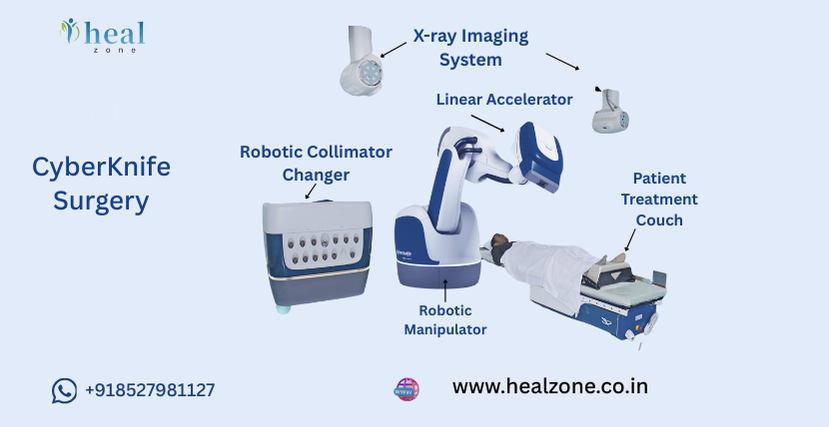
CyberKnife is a highly advanced radiosurgery system that treats cancerous and non-cancerous lesions using precise, focused beams of radiation, without a single incision.
Although it is called CyberKnife, there is no actual knife or surgery involved. A robotic arm targets tumors anywhere in the body with great accuracy. This precision makes CyberKnife helpful for treating tumors in sensitive or hard-to-reach places.
CyberKnife Cost Comparison: India vs Other Countries
|
India |
$6,500 – $8,000 |
|
Turkey |
$6,500 – $9,500 |
|
UAE (Dubai etc.) |
$5,000 – $10,000 |
|
Thailand |
$8,000 – $15,000 |
|
UK (private) |
$6,000 – $30,000+ |
|
Singapore |
$25,000 – $50,000 |
|
USA |
$25,000 – $65,000 |
Outside India, CyberKnife treatment is often known to be very expensive, especially in countries like the US, UK, or Canada. Many families struggle to afford it or face long waiting lists.
India provides the same expertise, advanced robotic technology, and personalized treatment planning as other countries, but at a much lower cost. This makes India a top choice for both local and international patients who want timely and affordable care.
Top Hospitals for CyberKnife Treatment in India

Indraprastha Apollo Hospital, New Delhi
Indraprastha Apollo Hospital, NH-19, New Delhi

Medanta-The Medicity Gurgaon
CH Baktawar Singh Rd, Medicity, Islampur Colony, Sector 38, Gurugram, Haryana 122001

Fortis Memorial Research Institute (FMRI) Gurugram
Sector - 44, Opposite HUDA City Centre, Gurugram, Haryana 122002

Max Super Speciality Hospital, Saket
Press Enclave Marg, Saket, New Delhi, Delhi 110017
How CyberKnife Radiosurgery Works?
CyberKnife works by delivering strong radiation beams directly to the tumour while preserving the healthy tissues surrounding it.
Here’s how it generally works:
- Imaging and tumour location mapping
- Computer-driven radiation planning
- Robotic arm delivers radiation from multiple angles
- Real-time tracking adjusts for patient movement
This tracking system lets the tumor be targeted even if you breathe or move a little during treatment. This makes the process very accurate and comfortable.
CyberKnife vs Conventional Radiotherapy
CyberKnife is different from traditional radiation therapy in several ways:
|
Treatment Sessions |
Many sessions |
Very few sessions |
|
Accuracy |
Less precise |
Extremely precise |
|
Impact on Healthy Tissue |
Higher risk of damage |
Much lower risk |
|
Comfort |
Can require restraints |
Non-invasive and comfortable |
This advanced approach often means a faster return to daily life and fewer long-term side effects.
CyberKnife vs Gamma Knife
Both CyberKnife and Gamma Knife are used for radiosurgery, but there are differences:
- Gamma Knife is mainly used for brain conditions
- CyberKnife can treat tumors anywhere in the body
- CyberKnife offers more flexibility and comfort, without the rigid head frame often needed in Gamma Knife treatments
Your doctor chooses based on what best suits your tumor location and health needs.
CyberKnife vs Surgery
Compared to open surgery, CyberKnife offers:
- No incisions
- No general anaesthesia
- No long hospital stay
- Faster recovery
- Lower risk of infection or bleeding
CyberKnife can be a safer and more comfortable option than surgery for older patients, those with health issues, or people with tumors in difficult locations.
Conditions Treated with CyberKnife
CyberKnife can treat a broad range of conditions, including:
- Tumors in the brain and spine
- Tumors in organs like the lungs, liver, pancreas, kidneys
- Tumors in delicate areas where surgical removal is risky
Because it is so precise, CyberKnife works well for both cancerous and some non-cancerous conditions.
Cancer Types Treated by CyberKnife
Many cancer cases can benefit from this technology, such as:
- Brain cancer
- Prostate cancer
- Lung cancer
- Liver and pancreatic cancer
- Spinal tumours
- Recurrent cancers previously treated by surgery or radiation
CyberKnife can slow or stop cancer growth and helps protect the healthy tissue around the tumor.
Non-Cancer Applications
CyberKnife is also used for:
- Benign brain tumors
- Abnormal blood vessel formations such as AVMs
- Certain nerve disorders like trigeminal neuralgia
It can ease symptoms and help you feel better, all without surgery.
Indications for CyberKnife Treatment
Doctors recommend CyberKnife when:
- Surgery is too risky or not possible
- Tumor lies close to critical nerves or organs
- Patient has previously received radiation
- A quick or minimally invasive approach is needed
Your medical team carefully evaluates whether CyberKnife is the best option for you.
Who is the right candidate?
You may be a good candidate if:
- You have a tumor that requires high-precision treatment
- You cannot undergo major surgery due to medical conditions
- You prefer treatment with minimal downtime
- Your tumor can be safely targeted with radiation
Each case is unique — consultation is essential.
Benefits of CyberKnife Treatment
Patients appreciate CyberKnife for many reasons:
- No incisions or surgical pain
- Short treatment time
- Precise targeting means fewer side effects
- Quick return to normal life
- Safe for patients who cannot undergo surgery
The comfort and convenience of CyberKnife can make the treatment process much less stressful.
Risks and Complications of CyberKnife Treatment
Although safer than many alternatives, CyberKnife can still carry risks such as:
- Fatigue after treatment
- Swelling in the treated area
- Mild radiation-related discomfort
- Rare complications depending on tumor location
Your doctors will watch you closely and help with any problems that come up.
Limitations of CyberKnife Radiosurgery
CyberKnife, while impressive, has boundaries:
- Not suitable for very large tumors
- May not replace surgery in all cases
- Requires thorough imaging and planning
- Some patients may need repeat treatment
Knowing these limits helps you have realistic expectations.
CyberKnife Treatment Procedure: Step-by-Step
Here’s a gentle breakdown of what you can expect:
- Consultation with specialists
- Detailed imaging scans
- Personalised treatment planning
- Treatment session (no cutting, no pain)
- Short recovery period
- Regular follow-up visits
Patients get support and information at every step of the process.
Pre-Treatment Evaluation and Planning
Before treatment begins:
- Doctors review medical history
- You undergo imaging like CT or MRI
- Some patients receive small markers for tracking
- The team explains treatment and prepares your schedule
This stage ensures everything is precise and tailored to you.
Duration and Number of Sessions
CyberKnife sessions are usually short and painless. Depending on your case:
- Each session may last under an hour
- You may need only a handful of visits
- Most patients go home the same day
This convenience is especially helpful for those travelling from far distances.
Post-Treatment Care and Monitoring
After treatment, doctors will:
- Check for immediate reactions
- Provide symptom care if needed
- Schedule follow-up imaging
- Guide you with lifestyle advice
Support continues even after your treatment session ends. Your wellbeing remains the top priority.
Success Rate and Treatment Outcomes
Many patients experience tumour control, symptom relief, and improved comfort. Because of CyberKnife’s precision, long-term outcomes are often encouraging, helping patients continue their lives with renewed hope and stability.
Recovery Timeline After CyberKnife
Recovery is typically smooth:
- Mild tiredness for a few days
- Gradual return to daily activities
- Follow-up scans show progress over time
Most patients get back to their normal routines much sooner than they would after surgery.
Long-Term Follow-Up and Quality of Life
Follow-up visits and imaging are essential to:
- Monitor tumor shrinkage or control
- Prevent recurrence
- Maintain overall health
With good care and healthy habits, most people can enjoy an active and fulfilling life after treatment.
Side Effects and Their Management
Common side effects can include:
- Fatigue
- Skin changes if the tumor is near the surface
- Mild discomfort
These side effects are usually temporary and easy to manage. Paying attention to how you feel and talking with your care team can help you stay comfortable.
Factors Affecting CyberKnife Treatment Cost in India
Your final cost may depend on:
- City and hospital chosen
- Number of treatment sessions
- Tumour complexity and location
- Imaging and pre-operative work
- Follow-ups and supportive care
- Category of hospital accommodation
Knowing about these factors can help you plan with more confidence.
Technology and Imaging Requirements
CyberKnife uses advanced imaging and robotic systems to make treatment accurate. These technologies need skilled specialists and special equipment, which adds to the safety and value of the treatment.
Lifestyle Guidelines After CyberKnife
A few helpful habits:
- Healthy diet to support recovery
- Gentle exercise approved by your doctor
- Stress management and emotional support
- Keeping up with follow-up visits
- Avoiding tobacco and excessive alcohol
Living a healthy lifestyle can help your treatment work better.
Tips for Better and Faster Recovery
- Rest well, especially in the first week
- Stay hydrated and nourished
- Track how you feel and report concerns
- Lean on family support
- Maintain an optimistic mindset
Recovery is not only about your body. Emotional strength is also very important.
How Healzone Helps CyberKnife Patients?
Healzone is dedicated to making the treatment journey easier:
- Helping patients choose the right hospital and doctor
- Providing complete cost guidance before treatment
- Arranging travel and stay for out-of-city patients
- Supporting pre-treatment tests and scheduling
- Offering post-procedure assistance and rehabilitation connections
Healzone makes sure patients feel supported, informed, and never alone during their treatment journey.
Why Choose India for CyberKnife Treatment?
India offers:
- Advanced CyberKnife technology
- Skilled specialists trained with global standards
- Strong patient care culture
- Quick access without long waiting queues
- Affordable treatment packages
- A comforting environment for healing
India gives patients something very important: hope and healing without heavy financial stress.
Frequently Asked Questions
CyberKnife is an advanced robotic radiosurgery system that delivers highly focused radiation to tumors or abnormal tissues with extreme precision, without any incisions.
It uses real-time imaging guidance and a robotic arm to track and treat the target from multiple angles while adjusting for patient movement, such as breathing.
It is commonly used for brain tumors, spinal tumors, prostate cancer, lung cancer, liver tumors, pancreatic tumors, and certain non-cancerous conditions like AVMs and trigeminal neuralgia.
Most treatments involve 1 to 5 sessions, depending on the location and size of the tumor.
Benefits include high accuracy, reduced damage to healthy tissues, fewer treatment sessions, quick recovery, and no need for invasive immobilization devices.
Patients with tumors that are small to medium-sized, located in difficult-to-operate or radiation-sensitive regions, or those not fit for surgery are usually ideal candidates.
Clinical results show high control rates for many types of tumors because the system can deliver ablative doses with sub-millimeter precision.
Yes. Because it minimizes radiation exposure to healthy tissue, repeat treatments may be possible if needed.
