

Contact us for Idiopathic Thrombocytopenic Purpura (ITP) Treatment in India
Idiopathic Thrombocytopenic Purpura (ITP) Treatment in India
Introduction
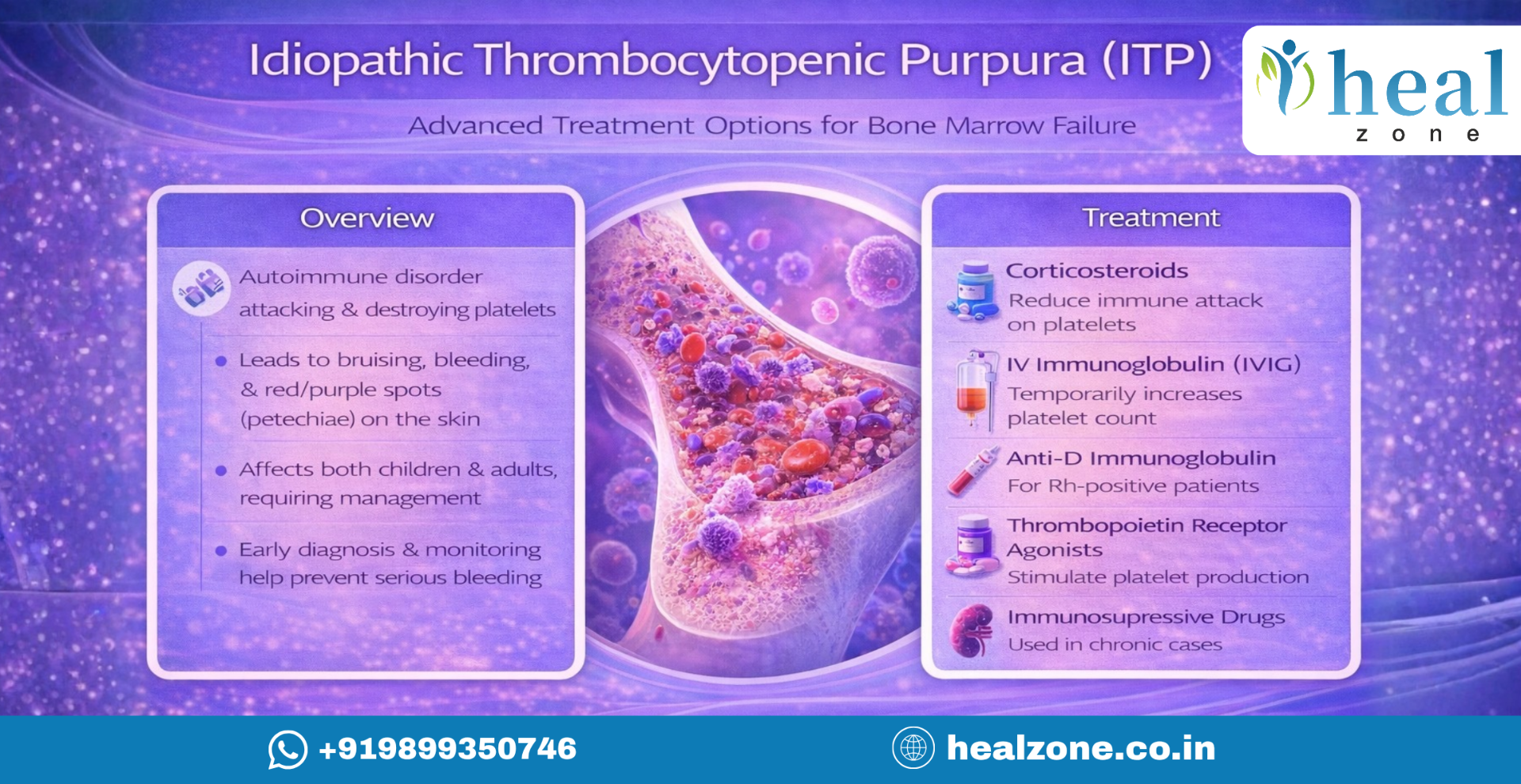
Idiopathic Thrombocytopenic Purpura (ITP), now more commonly referred to as Immune Thrombocytopenia, is a complex autoimmune blood disorder in which the body’s immune system mistakenly identifies platelets as foreign and destroys them. Because platelets are essential for clot formation and prevention of bleeding, their destruction leads to an increased risk of bruising, bleeding, and in severe situations, life-threatening hemorrhage.
ITP can affect children, adults, and the elderly, and the disease course varies widely—from temporary self-resolving cases to chronic immune-mediated disease requiring long-term therapy. Over the last two decades, remarkable advances in hematology, immunotherapy, and targeted medicines have transformed ITP from a frightening diagnosis into a highly manageable condition.
India has rapidly become a global hub for advanced hematology treatment, offering:
- International-standard diagnostic protocols
- Latest evidence-based therapies
- Highly experienced hematologists
- Modern accredited hospitals
- Significantly lower treatment costs
Through Healzone’s comprehensive medical tourism support, patients from India and abroad can access safe, affordable, and world-class ITP treatment with complete guidance from diagnosis to recovery.
Top Doctors for Idiopathic Thrombocytopenic Purpura (ITP)


Dr. Dharma Choudhary
MBBS, MD, DM
Bone Marrow Transplant Specialist, Hemato-Oncologist, Hematologist
20 Years Years of Experience

Dr. Gaurav Kharya
MBBS, MD, DM, Fellowship
Pediatric Hematologist, Pediatric Oncologist
24 Years Years of Experience

Dr. Pratibha Dhiman
MBBS, MD, DM, Fellowship, Certificates/Trainings
Hemato-Oncologist, Hematologist
22 Years Years of Experience

Dr. Rahul Bhargava
MBBS, MD, DM
Bone Marrow Transplant Specialist, Hemato-Oncologist, Hematologist
22 Years Years of Experience
What Is Happening Inside the Body in ITP?
In healthy individuals, platelets are produced in the bone marrow and circulate in the blood for about 7–10 days before being naturally removed. In ITP, the immune system creates autoantibodies against platelet surface proteins. These antibody-coated platelets are then rapidly destroyed, mainly in the spleen and liver.
At the same time:
- Platelet production in bone marrow may become impaired
- Immune imbalance continues to target new platelets
- Platelet lifespan becomes severely shortened
This dual mechanism leads to persistent thrombocytopenia and bleeding risk.
Platelet Count and Severity Levels
|
Platelet Count |
Clinical Significance |
|
150,000–450,000 |
Normal range |
|
100,000–150,000 |
Mild reduction |
|
50,000–100,000 |
Increased bruising risk |
|
20,000–50,000 |
Moderate bleeding risk |
|
Below 20,000 |
High risk of spontaneous bleeding |
|
Below 10,000 |
Medical emergency |
Understanding this range helps doctors decide when to monitor and when to treat.
Top Hospitals for Idiopathic Thrombocytopenic Purpura (ITP)

Indraprastha Apollo Hospital, New Delhi
Indraprastha Apollo Hospital, NH-19, New Delhi

Medanta-The Medicity Gurgaon
CH Baktawar Singh Rd, Medicity, Islampur Colony, Sector 38, Gurugram, Haryana 122001
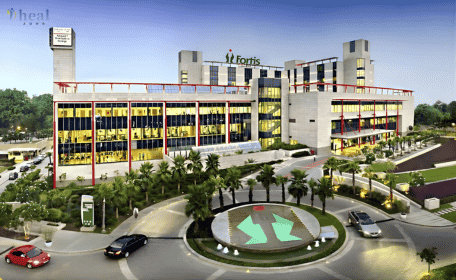
Fortis Memorial Research Institute (FMRI) Gurugram
Sector - 44, Opposite HUDA City Centre, Gurugram, Haryana 122002

BLK-Max Super Speciality Hospital, New Delhi
Pusa Rd, Radha Soami Satsang, Rajinder Nagar, New Delhi, Delhi – 110005

Causes and Risk Factors
The exact cause of primary ITP is unknown, but several triggers and associations are recognized.
Possible Triggers
- Viral infections (flu, hepatitis, HIV, COVID-related immune activation)
- Recent vaccination in rare cases
- Autoimmune diseases such as systemic lupus erythematosus
- Certain medications
- Lymphoid cancers like CLL or lymphoma
Risk Factors
- Female gender (especially in adults)
- Age between 20–50 years
- Existing autoimmune conditions
- Family history of immune disorders
Despite these associations, many patients develop ITP without any identifiable cause.
Signs and Symptoms of ITP
Symptoms depend largely on platelet level and bleeding tendency.
Skin and Surface Bleeding
- Easy bruising after minor trauma
- Purple patches called purpura
- Tiny pinpoint red spots (petechiae) on legs or arms
Mucosal Bleeding
- Frequent nosebleeds
- Gum bleeding while brushing
- Heavy or prolonged menstrual periods
Internal Bleeding (Severe Cases)
- Blood in urine or stool
- Vomiting blood
- Severe headache suggesting brain bleed (rare but critical)
Any sudden bleeding symptom requires urgent hematology evaluation.
Comprehensive Diagnosis of ITP in India
Accurate diagnosis is essential because many other diseases can mimic low platelet count. Leading Indian hospitals follow global hematology guidelines.
Step-by-Step Evaluation
1. Detailed Clinical History
Doctors assess:
- Recent infections
- Medication exposure
- Bleeding history
- Family history
2. Laboratory Investigations
- Complete Blood Count (isolated low platelets in ITP)
- Peripheral smear to rule out leukemia or pseudothrombocytopenia
- Viral screening (HIV, hepatitis B & C)
- Autoimmune markers
3. Bone Marrow Examination
Performed when:
- Patient is older than 40–50 years
- Treatment response is unclear
- Other marrow diseases suspected
India’s advanced labs ensure rapid, precise, and cost-effective diagnosis.
Cost of ITP Treatment in India
One of the biggest advantages is affordability.
Compared to the USA or Europe, patients save:
60%–80% on total treatment cost
Lower cost does not mean lower quality—India maintains international treatment standards.
Why International Patients Trust India for ITP Care
- Globally trained hematologists
- JCI/NABH accredited hospitals
- Advanced immunotherapy availability
- Minimal waiting time
- English-speaking medical teams
- Complete medical tourism infrastructure
Healzone – Complete Support for ITP Patients
Healzone simplifies the entire journey:
Before Arrival
- Medical report review
- Expert doctor selection
- Cost estimation
- Visa assistance
During Treatment
- Hospital coordination
- Translator services
- Accommodation support
- Dedicated patient coordinator
After Treatment
- Follow-up planning
- Online consultation
- Recovery guidance
This ensures stress-free treatment in India.
Life After ITP Treatment
Most patients can return to normal daily life.
Long-Term Care Tips
- Avoid injury-prone activities during low platelet phase
- Follow vaccination schedule after splenectomy
- Maintain regular hematology follow-up
- Seek early care for any bleeding symptom
With modern therapy, long-term survival and quality of life are excellent.
Conclusion
Idiopathic Thrombocytopenic Purpura is a serious but highly treatable autoimmune blood disorder. Thanks to advanced diagnostics, targeted therapies, experienced hematologists, and affordable healthcare, India stands among the best countries in the world for ITP treatment.
With Healzone’s end-to-end medical tourism support, patients receive:
- Accurate diagnosis
- Personalized treatment
- Safe hospital care
- Affordable pricing
- Long-term recovery guidance
All in one seamless healthcare journey.
Frequently Asked Questions
ITP is an autoimmune blood disorder in which the body’s immune system mistakenly destroys its own platelets, leading to a low platelet count and increased risk of bleeding or bruising.
ITP can range from mild to life-threatening. Many patients have only minor symptoms, but very low platelet levels can cause severe internal bleeding, which requires urgent medical treatment.
Common symptoms include: Easy bruising Petechiae (tiny red skin spots) Nosebleeds or gum bleeding Heavy menstrual bleeding Blood in urine or stool in severe cases Some patients may have no symptoms and are diagnosed during routine blood tests.
In most cases, the exact cause is unknown (primary ITP). However, it may be triggered by: Viral infections Autoimmune diseases like lupus Certain medications Blood cancers such as lymphoma or CLL (secondary ITP)
Diagnosis usually involves:
-
Complete Blood Count (CBC)
-
Peripheral blood smear
-
Viral and autoimmune screening
-
Bone marrow examination in selected cases
Indian hospitals follow international hematology guidelines for accurate diagnosis.
