

Contact us for Cost of Robotic Knee Replacement in India
Cost of Robotic Knee Replacement in India
$6,000 – $7,500
95 %
Robotic knee replacement surgery is becoming more common in India because it offers precise results and better outcomes for patients. A major benefit for those choosing this procedure in India is the lower cost. Patients usually pay much less than they would in Western countries, but still receive high-quality care and skilled surgeons.
The cost of robotic knee replacement in India usually includes:
- Hospital stay
- Surgery charges
- Robotic technology and disposables
- Pre-surgery evaluation
- Physiotherapy during hospitalization
- Nursing care and medications during the stay
However, the cost can change based on the hospital, city, type of implant, and the patient’s health. Even with these differences, many people from India and abroad find robotic knee surgery here to be a safe and affordable choice without losing quality or comfort.
Robotic Knee Replacement Cost Comparison: India vs Other Countries
Robotic knee replacement usually costs much more in Western countries because of higher technology and hospital fees. In India, the same robotic systems and implants are used, but the price is much lower.
|
India |
6,000 – 7,500 |
|
Turkey |
15,731 – 22,847 |
|
Singapore |
18,000 – 25,000 |
|
Australia |
20,000 – 30,000 |
|
UK |
18,000-25,000 |
|
USA |
15,607 – 53,918 |
Many international patients pick India not only for the lower cost, but also for shorter waiting times and personal care, which can be hard to find in other places. Skilled surgeons, advanced robotic systems, and affordable treatment make India a trusted place for medical care.
Top Hospitals for Robotic Knee Replacement in India

Indraprastha Apollo Hospital, New Delhi
Indraprastha Apollo Hospital, NH-19, New Delhi

Medanta-The Medicity Gurgaon
CH Baktawar Singh Rd, Medicity, Islampur Colony, Sector 38, Gurugram, Haryana 122001

Fortis Memorial Research Institute (FMRI) Gurugram
Sector - 44, Opposite HUDA City Centre, Gurugram, Haryana 122002

Max Super Speciality Hospital, Saket
Press Enclave Marg, Saket, New Delhi, Delhi 110017
What is Robotic Knee Replacement?
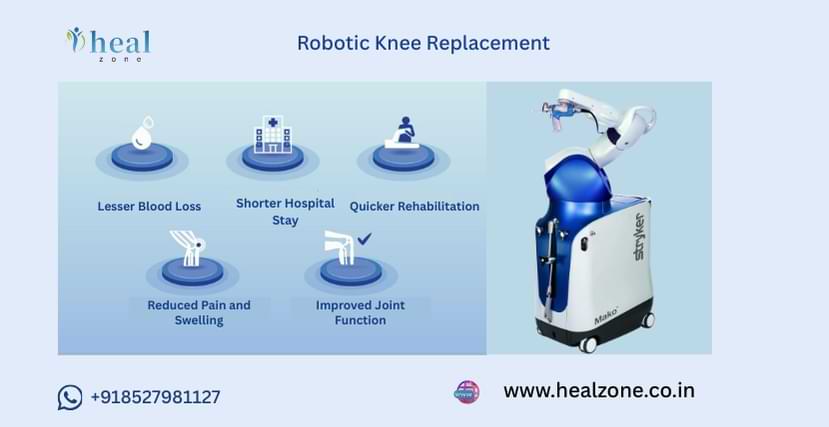
Robotic knee replacement is a modern way to replace a damaged knee joint with an artificial implant using robotic tools. The robot helps the surgeon plan and perform the surgery with greater accuracy.
This technology allows the surgeon to:
- Accurately map the knee joint
- Remove only the damaged tissues
- Preserve surrounding healthy bone
- Ensure the implant fits perfectly
Robotic guidance helps the knee stay properly aligned and balanced, which can make it feel more natural after healing. This is especially helpful for people with severe arthritis, long-term knee pain, or trouble walking because of joint damage.
How Robotic Knee Surgery Works?
Before surgery, doctors take detailed 3D images of the knee. This helps the surgeon make a custom plan for each patient. During the operation, the robotic arm guides the surgeon to cut and place the implant very accurately.
The robot does not do the surgery by itself. The surgeon is always in control, and the robot just helps make the procedure more precise and safe.
Key features of how the process works:
- Sensors and tracking systems provide real-time feedback
- Robotic guidance avoids even slight alignment errors
- Surrounding soft tissues and ligaments are better protected
This personalized approach leads to better movement, more stability, and less pain after surgery.
Types of Robotic Knee Replacement Systems
India has many advanced robotic systems that improve precision, implant placement, and long-term results in knee replacement. These systems help surgeons make custom plans for each patient’s unique knee shape and movement.
- Mako Robotic System
This advanced system uses 3D CT scans to map the knee before surgery. It lets the surgeon make very precise bone cuts and place the implant in the best position. Mako is used for both partial and total knee replacements, helping the implant fit better and possibly last longer. - NAVIO Surgical System
NAVIO does not need a CT scan. It creates a 3D model of the knee during the surgery. The handheld robotic tool gives the surgeon real-time control and flexibility, while lowering the chance of mistakes. This system is good for patients who want to avoid CT scan radiation and helps protect ligaments during less invasive surgery. - ROSA Knee Robot
The ROSA system uses sensors and motion tracking to adjust during surgery. It helps balance the soft tissues, which is important for natural knee movement and less stiffness after surgery. With real-time data, the surgeon can adjust the implant to match how the knee moves, not just how it looks in a scan.
Each system has its own benefits, and the surgeon will pick the best one for each patient’s needs and knee condition.
Robotic vs Conventional Knee Replacement
Conventional knee replacement works well, but robotic technology makes the surgery even more accurate.
|
Precision |
Manual alignment |
Digital mapping & guided cuts |
|
Bone Preservation |
Slight variations possible |
Removes only damaged areas |
|
Implant Fit |
Standard sizing |
Personalized placement |
|
Soft Tissue Protection |
Higher chances of imbalance |
Real-time adjustment |
|
Recovery Comfort |
Good |
Often better & faster |
Robotic surgery can make the knee feel more natural after recovery because it is matched to each patient’s anatomy.
Indications for Robotic Knee Replacement
Doctors may recommend robotic knee replacement if a patient has:
- Constant knee pain even at rest
- Difficulty walking or climbing stairs
- Joint stiffness and reduced mobility
- Severe osteoarthritis or rheumatoid arthritis damage
- Deformities like bow-legs or knock-knees
- Failed response to medications and physiotherapy
It is especially useful when the surgery needs extra accuracy in placing the implant.
Who is the Right Candidate for Robotic Knee Replacement?
Robotic knee replacement is suitable for:
- Adults diagnosed with moderate to severe knee joint damage
- Patients who want a more natural feeling implant
- Younger or active individuals expecting long-lasting results
- People who want improved mobility and quicker recovery
The doctor will check your overall health, weight, bone strength, and lifestyle before suggesting surgery.
Benefits of Robotic Knee Replacement
Patients often choose robotic knee replacement because it offers:
- Better precision in implant placement
- Faster recovery and reduced post-operative pain
- Smaller incisions and less scarring
- More natural knee movement after healing
- Lower risk of complications and revision surgeries
- Improved long-term function and comfort
Many patients get back to their normal activities sooner and feel more confident moving around.
Limitations of Robotic Knee Surgery
Although robotic knee replacement offers many advantages, there are some limitations:
- Slightly higher cost due to technology usage
- Availability only in advanced hospitals
- Needs a highly trained and experienced surgical team
- May not be suitable for patients with certain deformities or fragile bones
A full medical checkup helps decide if robotic surgery is the best option.
Factors Affecting Robotic Knee Replacement Cost in India
Several elements influence the final cost, including:
- Choice of hospital: luxury rooms or premium facilities cost more
- City: metro cities usually have slightly higher medical prices
- Surgeon's expertise and training in robotic surgery
- Implant brand and material quality
- Pre-existing medical conditions that require extra care
- Duration of hospital stay and post-surgery follow-up requirements
Choosing a reputable hospital and team is important for the safest outcomes.
Type of Implant and Material for Robotic Knee Replacement
Different implant materials are available to suit patient age, body structure, and activity levels:
- Metal-on-plastic implants – most commonly used
- Ceramic or advanced polymer implants – offer longer durability
- Customized implants – designed to match unique anatomy
Your orthopedic surgeon will help you choose the right option depending on lifestyle and future expectations.
Pre- and Post-Surgery Medical Requirements for Robotic Knee Replacement
Before surgery, patients undergo:
- Blood tests and medical evaluation
- Knee X-ray or CT scan
- Medication review
- Physiotherapy guidance
- Blood sugar and blood pressure management if required
After surgery, the focus shifts to:
- Pain control and wound care
- Preventing infection
- Early walking exercises
- Guided physiotherapy sessions
- Follow-up visits for monitoring implant healing
These steps ensure a smooth journey from hospital admission to home recovery.
Robotic Knee Replacement Procedure: Step-by-Step
Here’s a simplified overview of what happens during surgery:
Pre-operative Planning
- Detailed assessment of knee condition through X-rays/CT scans
- Creation of a 3D virtual model of the patient’s knee
- Surgeon uses this model to plan:
- Bone cuts
- Implant size and positioning
- Soft-tissue balance requirements
This personalized plan reduces guesswork during surgery.
Anaesthesia & Patient Positioning
- Patient is given spinal or general anaesthesia
- Leg is positioned to allow full access to the joint
- Robotic tracking sensors are attached around the knee to guide the system
Surgical Incision & Exposure
- A controlled skin incision is made over the knee
- Soft tissues are carefully moved aside
- Diseased cartilage and damaged bone are exposed
Real-Time Mapping of the Knee
- The robotic system scans markers placed on bone
- Navigation system matches anatomy to pre-built 3D model
- Adjustments are made by the surgeon if the knee alignment differs intra-operatively
Bone Reshaping with Robotic Assistance
- Robotic arm or handheld tool guides surgeon’s movements
- Ensures:
- Minimized healthy bone removal
- Accurate bone cuts within pre-planned limits
- Optimal soft-tissue balance
The robot does not operate independently; the surgeon maintains full control.
Implant Placement
- Artificial knee implant components are placed
- Robotic system verifies:
- Precise alignment
- Proper joint stability
- Correct implant size and rotation
Any adjustments needed are made instantly.
Closure and Dressing
- Soft tissues are repaired and incision is closed
- Sterile dressings applied to protect the wound
Post-operative Recovery & Rehabilitation
- Early mobility encouraged within 24–48 hours
- Physiotherapy to improve:
- Knee strength
- Range of motion
- Walking ability
Follow-up checks ensure implant stability and wound healing.
The whole process is designed to be accurate and to give the patient long-term comfort.
In-Hospital Recovery After Surgery for Robotic Knee Replacement
Patients usually spend a few days in the hospital. During this time:
- You’ll get support standing and walking, sometimes the same day
- Pain medication ensures comfort during movement
- Physiotherapists help begin exercises safely
- Nurses monitor wound healing and overall progress
Having family support during this time gives patients emotional strength and encouragement.
Postoperative Rehabilitation and Physiotherapy
Rehabilitation plays a huge role in the success of robotic knee replacement. Physiotherapy helps:
- Strengthen thigh and calf muscles
- Improve flexibility and balance
- Train pain-free walking and standing
- Prevent stiffness
Sticking to the exercise plan is important for getting back your independence sooner.
Success Rate and Expected Outcomes after Robotic Knee Replacement
Most patients experience noticeable improvements after healing:
- Less pain and stiffness
- Smoother walking and movement
- Ability to resume normal daily activities
- Renewed confidence in mobility
For many people, robotic knee replacement helps them regain their independence and quality of life after years of discomfort.
Recovery Timeline After Robotic Knee Surgery
Although every person heals differently, a general timeline is:
- First week: Walking with support
- 2–4 weeks: Reduced pain and improved bending
- 6 weeks: Better stability and strength
- 3 months: Return to most regular activities
- 6–12 months: Full healing and confidence in the knee
Regular physiotherapy can really help you recover faster and feel more comfortable.
Long-Term Care and Mobility Support for Robotic Knee Replacement
Even after full recovery, ongoing care helps maintain knee health:
- Regular walking and low-impact exercises
- Healthy body weight to reduce pressure on the knee
- Avoiding high-impact sports unless approved by surgeon
With proper care, implants can last for many years and help you stay active.
Risks and Complications of Robotic Knee Replacement
While robotic surgery is generally safe, possible complications include:
- Infection
- Blood clots
- Persistent stiffness
- Implant wear in the long term
- Rare allergic reactions to implant materials
Picking a skilled and certified robotic surgeon can greatly lower these risks.
Lifestyle Changes After Robotic Knee Surgery
Positive lifestyle habits maximize the long-term benefits:
- Balanced diet to maintain healthy weight
- Daily mobility exercises
- Avoiding smoking and limiting alcohol
- Using supportive footwear
- Practicing safe techniques when bending or lifting
These habits help patients stay active and comfortable for many years.
Tips for Better and Faster Recovery After Robotic Knee Surgery
Suggestions to support healing:
- Follow physiotherapy routine strictly
- Sit and stand correctly to avoid joint strain
- Keep well-hydrated and nourish your body
- Keep a positive mindset because emotional wellbeing matters
- Ask for help when needed; don’t rush into heavy activity
Small steps each day lead to big results in the long term.
How Healzone Helps Knee Replacement Patients?
Healzone offers personalized support for anyone considering robotic knee replacement in India:
- Assistance in selecting top orthopedic hospitals
- Guidance to expert robotic surgeons
- Clear cost discussions with no hidden charges
- Help with travel and accommodation for international patients
- Pre- and post-surgery counseling and rehabilitation guidance
Their goal is to make sure every patient feels informed, supported, and confident during the whole process.
Why Choose India for Robotic Knee Replacement?
India has become a global leader in robotic knee replacement because of:
- Highly trained orthopedic surgeons with vast surgical experience
- State-of-the-art robotic technology
- Affordable treatment packages with world-class standards
- Dedicated rehabilitation support
- Warm and compassionate patient care
- Minimal waiting times for surgery
India provides modern healthcare along with comfort and reassurance during recovery.
Doctor Video
Doctor Video
Frequently Asked Questions
Robotic knee replacement is a kind of knee surgery where the surgeon uses a robotic system to place the implant and prepare the bone more precisely. The robot does not work alone; the surgeon is always in full control.
Robotic assistance improves accuracy, protects healthy tissues, and reduces complications compared to conventional techniques. It is considered equally safe and may offer faster recovery in many cases.
No. The robot is just a tool used during surgery. The implant is similar to those used in traditional knee replacements, usually made of metal and high-grade medical plastic.
Many patients experience:
- Less pain in the early recovery period
- Faster return to daily activities
- Better knee movement and comfort
However, actual recovery speed can vary based on age, health, and physiotherapy involvement.
Ideal candidates include:
- Patients with severe arthritis not relieved by medication or therapy
- Individuals wanting a more natural-feeling knee movement
- Those needing accurate alignment due to deformity
Final eligibility is decided by an orthopedic surgeon after evaluation.
The operation typically takes 1–2 hours, depending on whether it is partial or total replacement and patient-specific factors.
Robotic surgeries provide high accuracy and excellent long-term outcomes. Studies show improved implant longevity due to precise alignment and balanced knee movement.
Yes. Physiotherapy is essential for recovering:
- Strength
- Balance
- Flexibility
Therapy usually starts within the first 24–48 hours after surgery.
All surgeries have risks. Possible complications include:
- Infection
- Bleeding
- Blood clots
- Stiffness
However, robotic precision helps minimize many technical errors.
Modern implants can last 15 to 25 years or more with good care and proper alignment, which is another reason why robotic accuracy is helpful.
